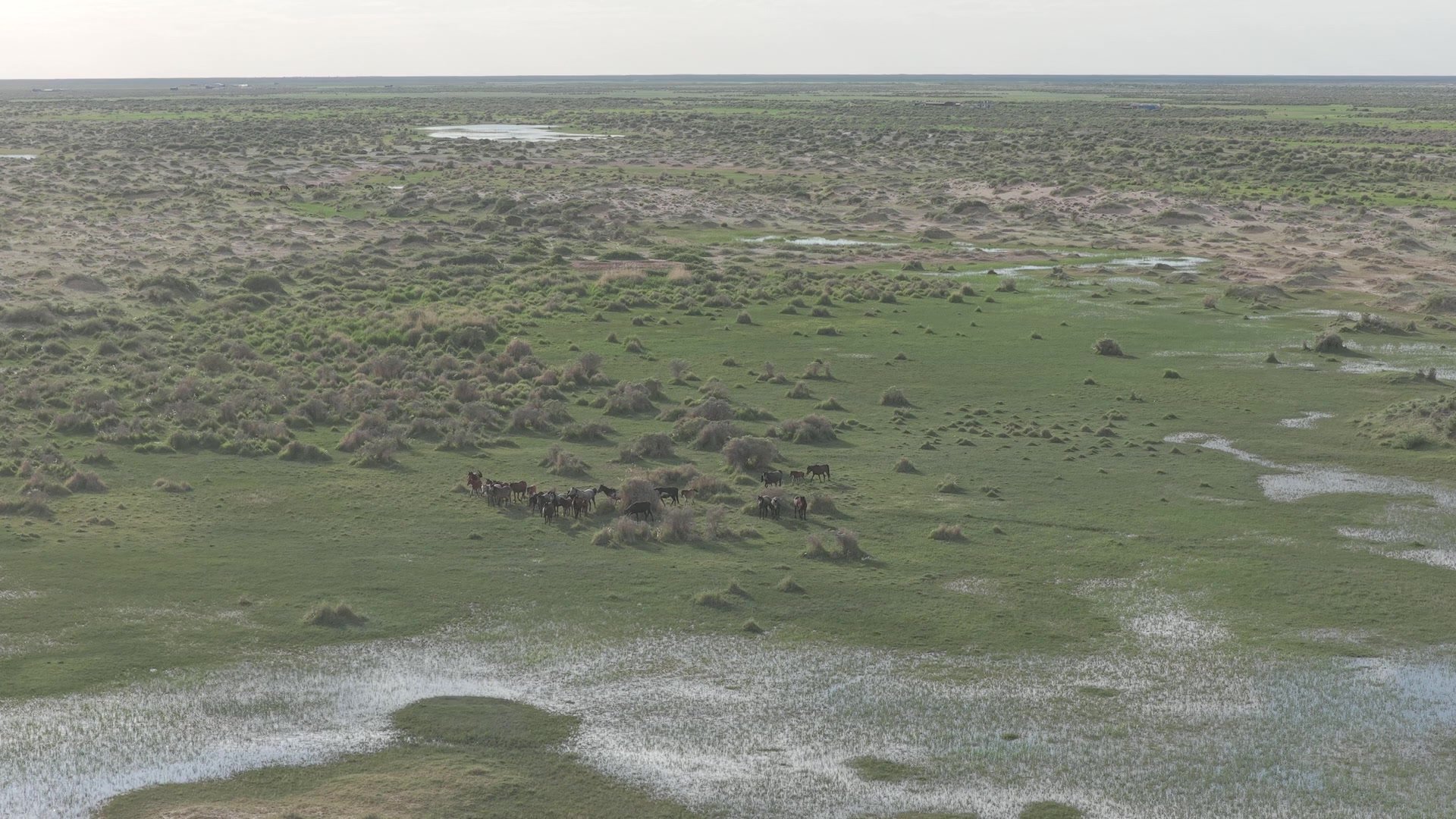
Land, water, life.
Ecological restoration in the Qaidam Basin, seen through its plants, water, wildlife and the people who work the land.
Restoration begins with roots.
Saxaul shrubs are grown alongside Cistanche, a medicinal plant supported by their roots. Caring for these plants connects the restoration of vegetation with a harvest and a livelihood.
How saxaul and Cistanche grow together
Saxaul is the host plant. Cistanche attaches to its roots and depends on that living connection as it grows. Cultivating them together links the care of desert vegetation with the work of growing medicinal plants.
Unrestored ground and restoration in progress, photographed from different viewpoints.
Living with wind and sand.
A wall of dust approaches. Sand races across the ground, and the horizon disappears. Restoring vegetation in this landscape takes years of planting and care.
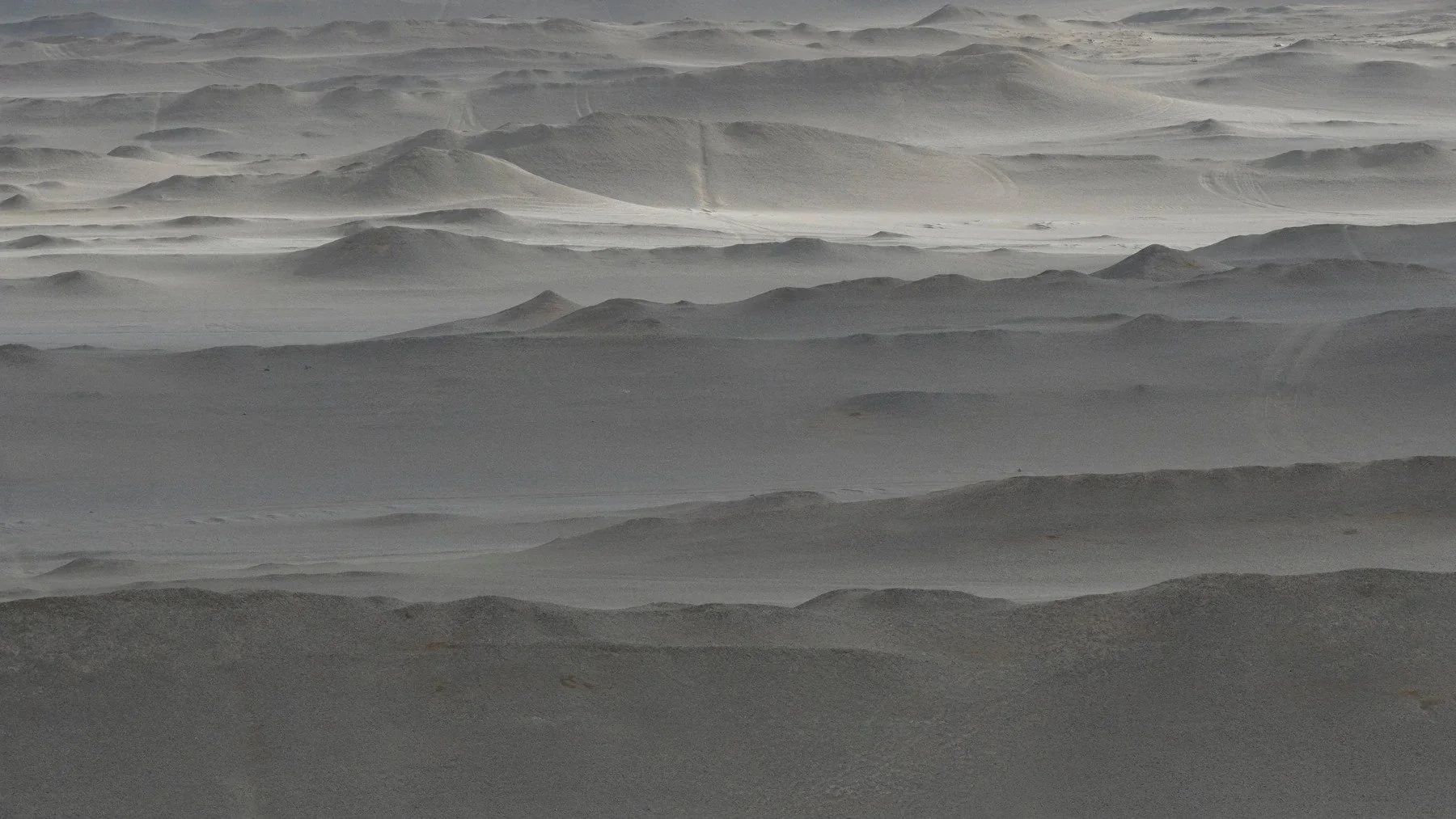
Unrestored desert site · Qaidam Basin
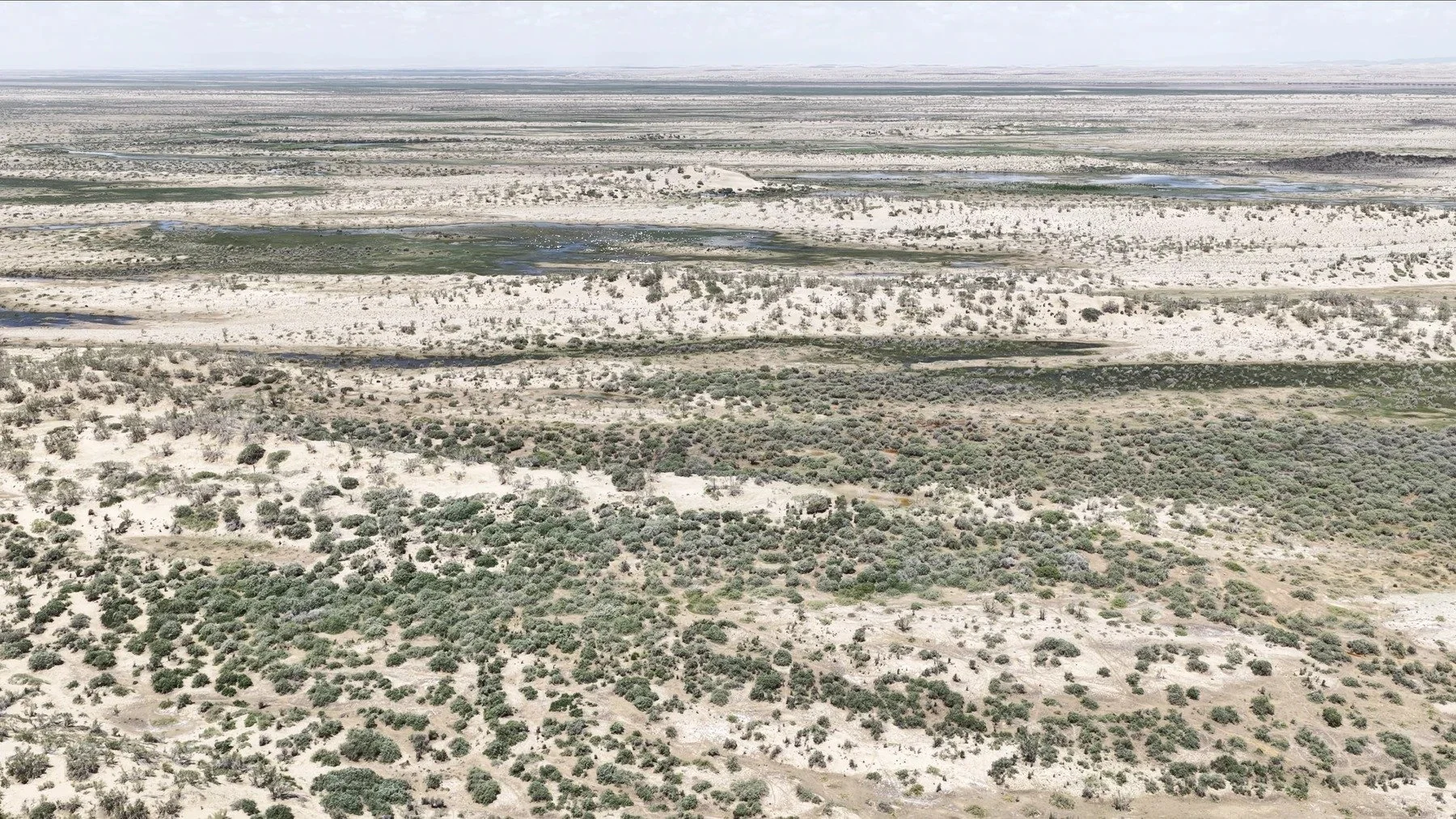
Restoration in progress · Qaidam Basin
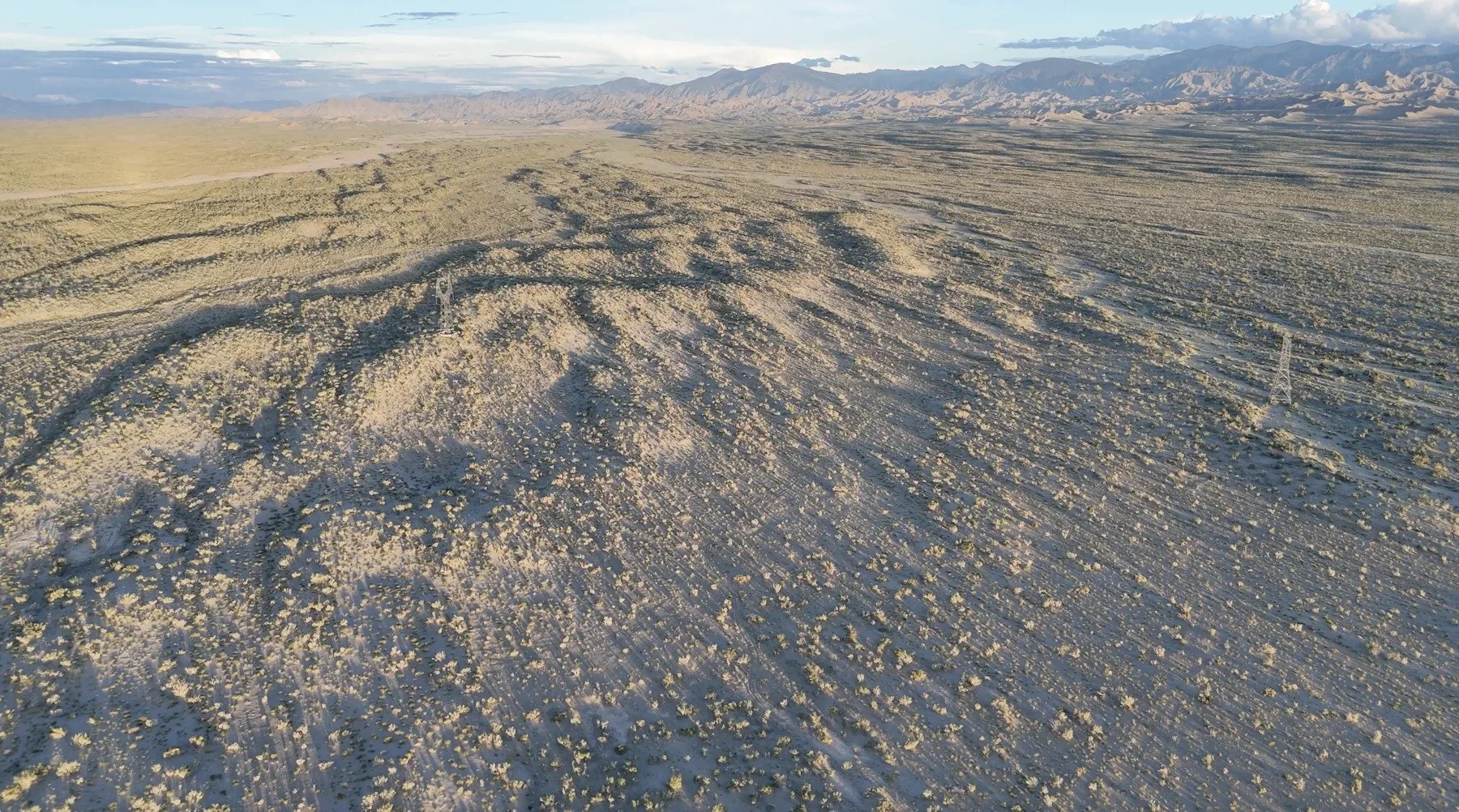
Landscape under restoration · Qaidam Basin
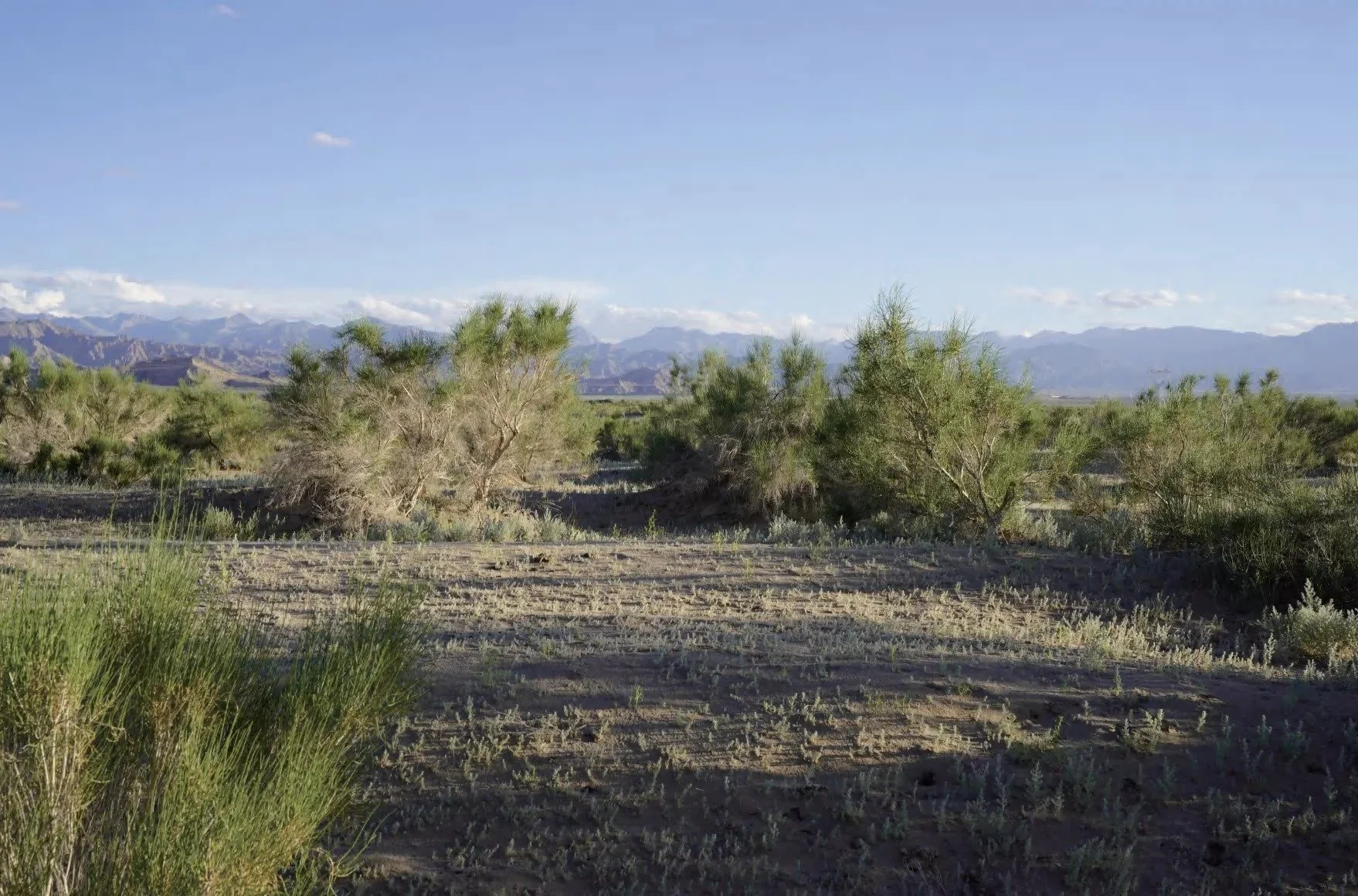
Planting in sandy ground · Qaidam Basin
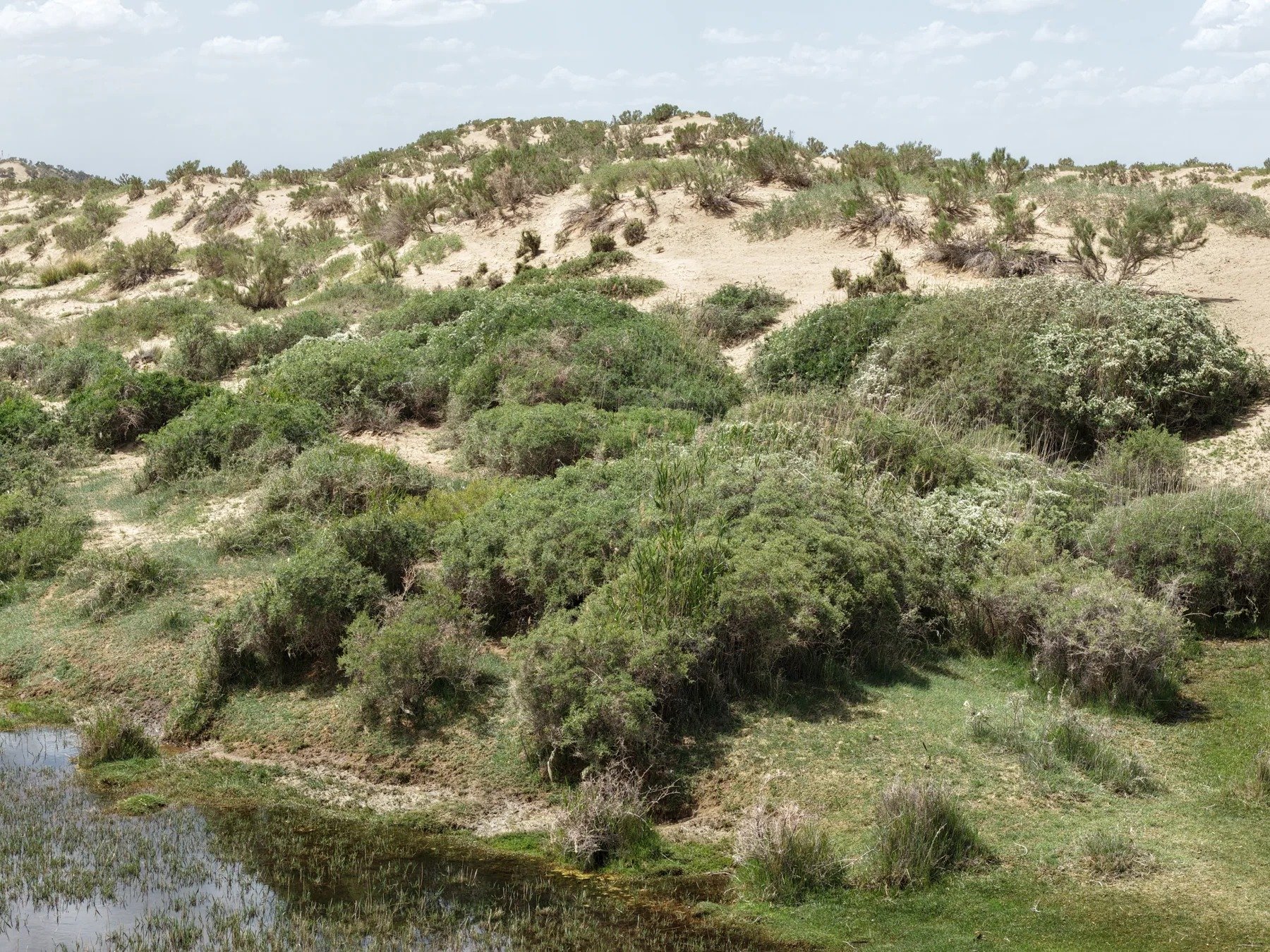
Shrubs across the sands · Qaidam Basin
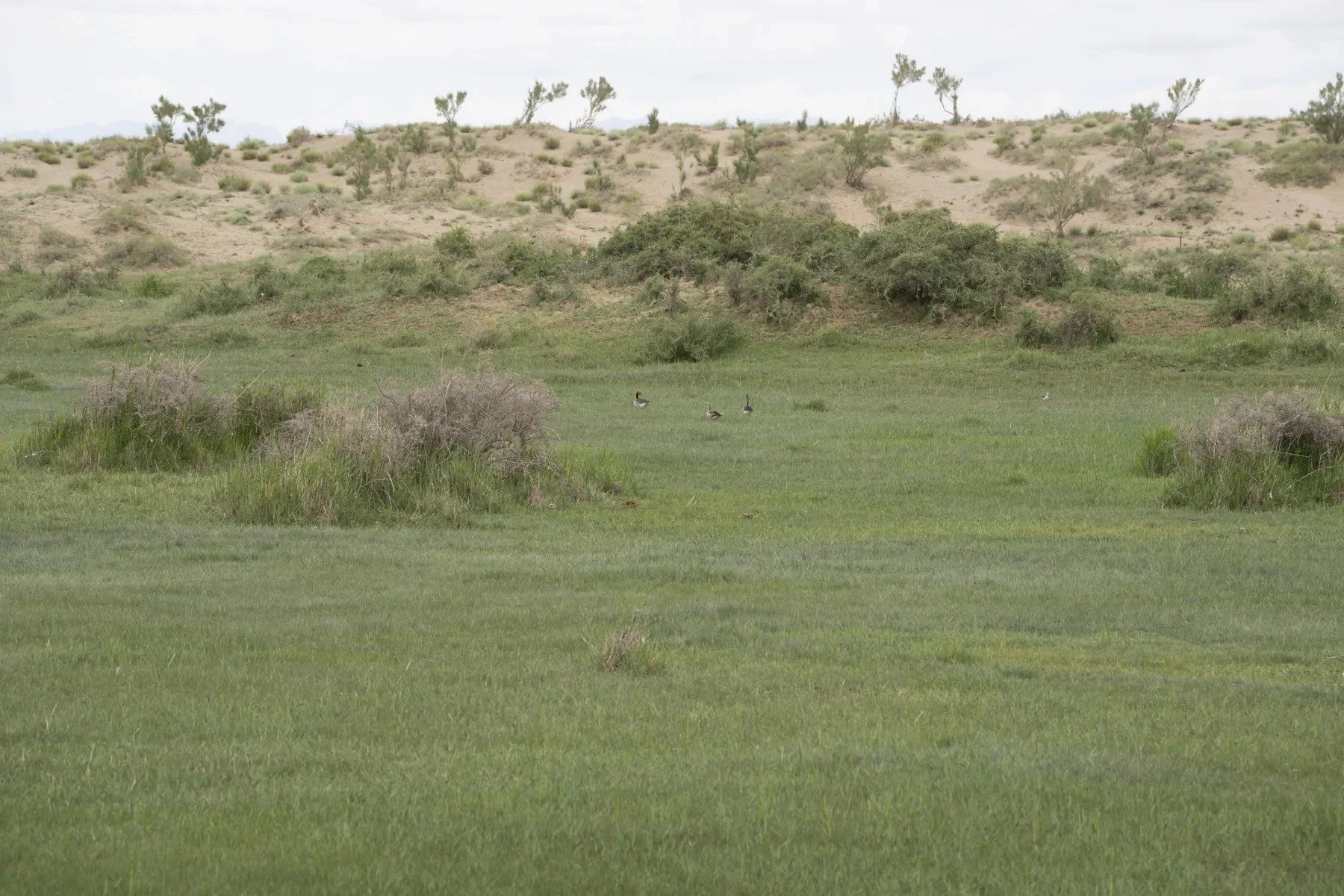
Vegetation and habitat · Qaidam Basin
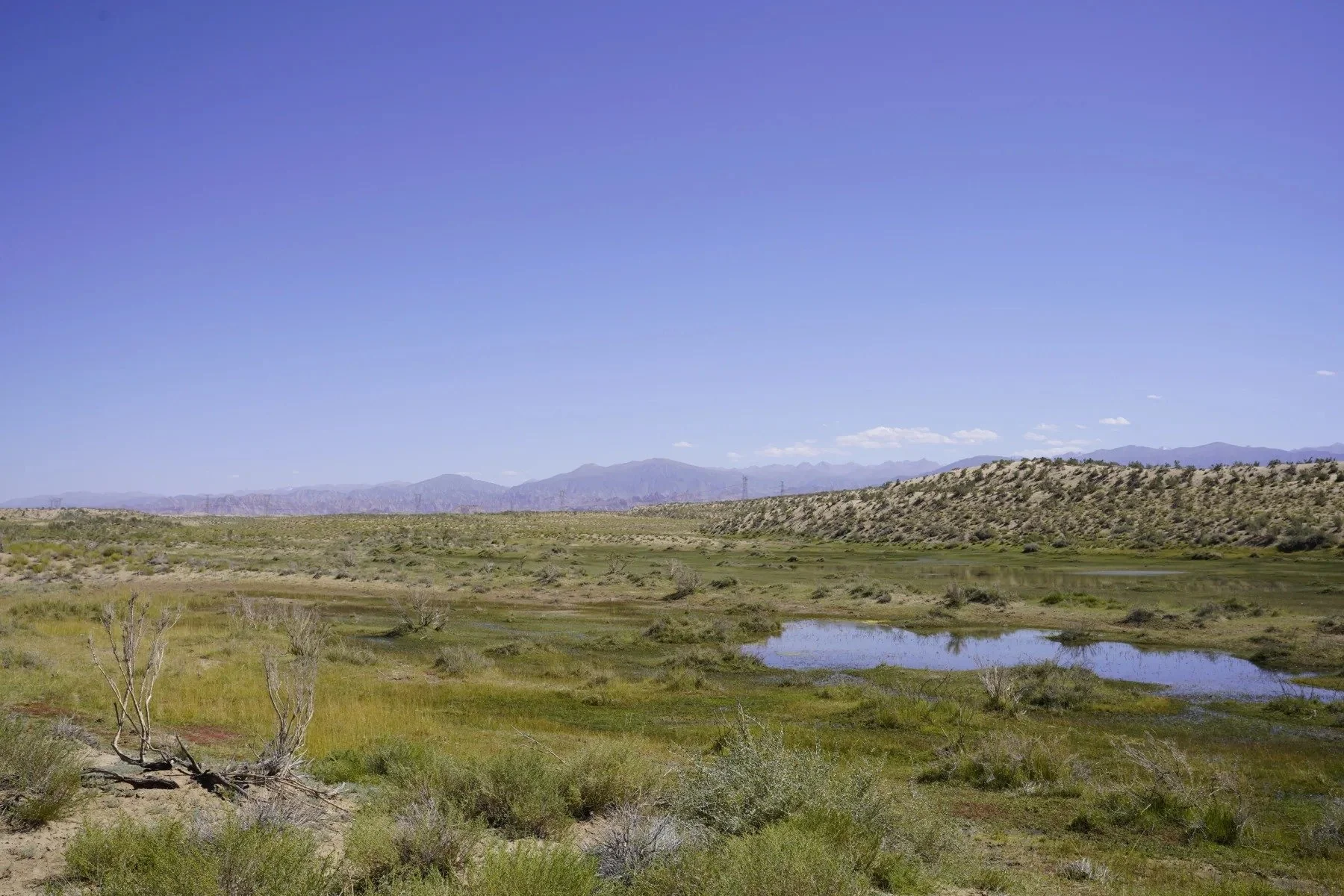
A late-summer meadow · Qaidam Basin
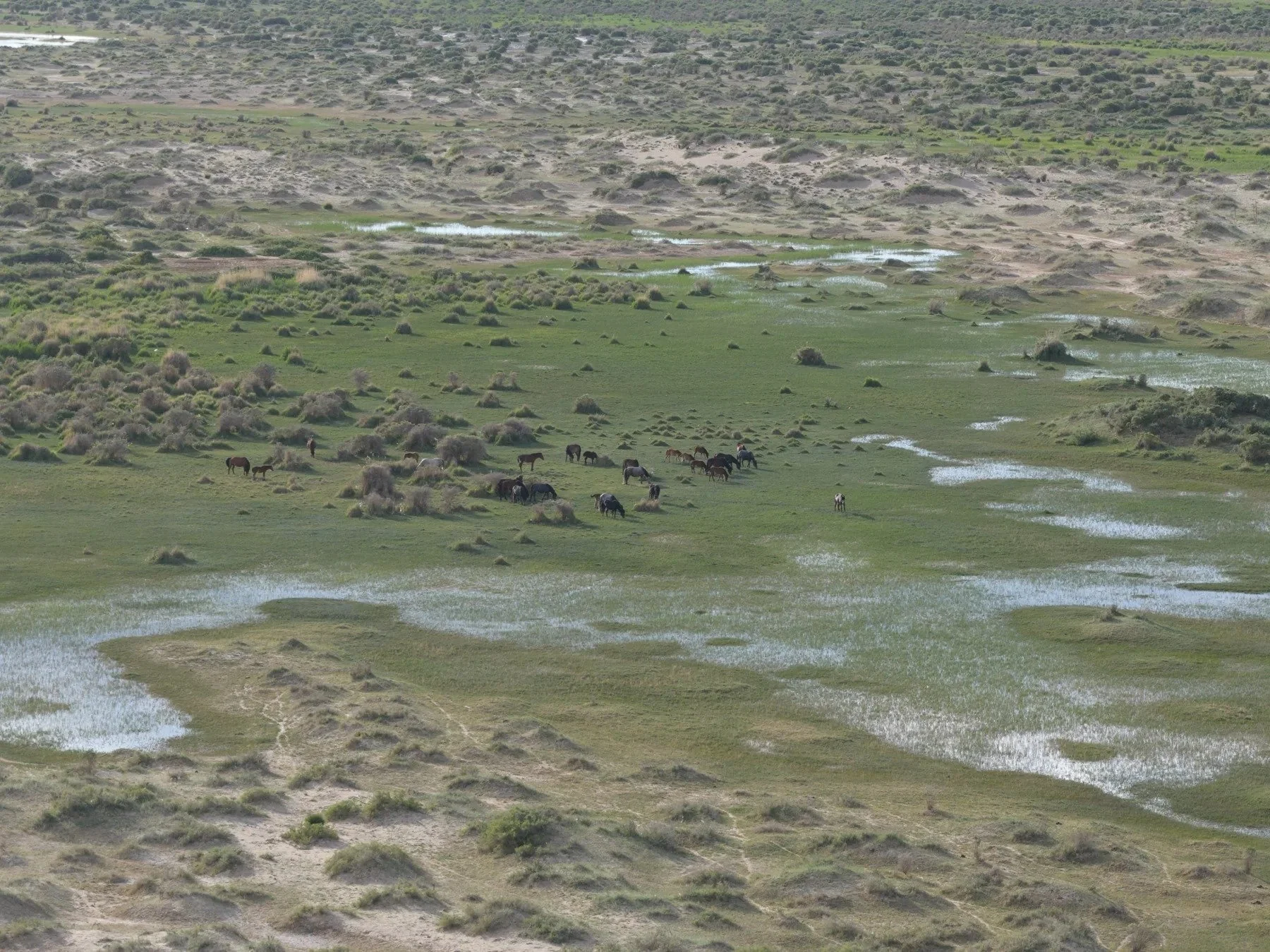
Meadow vegetation · Qaidam Basin
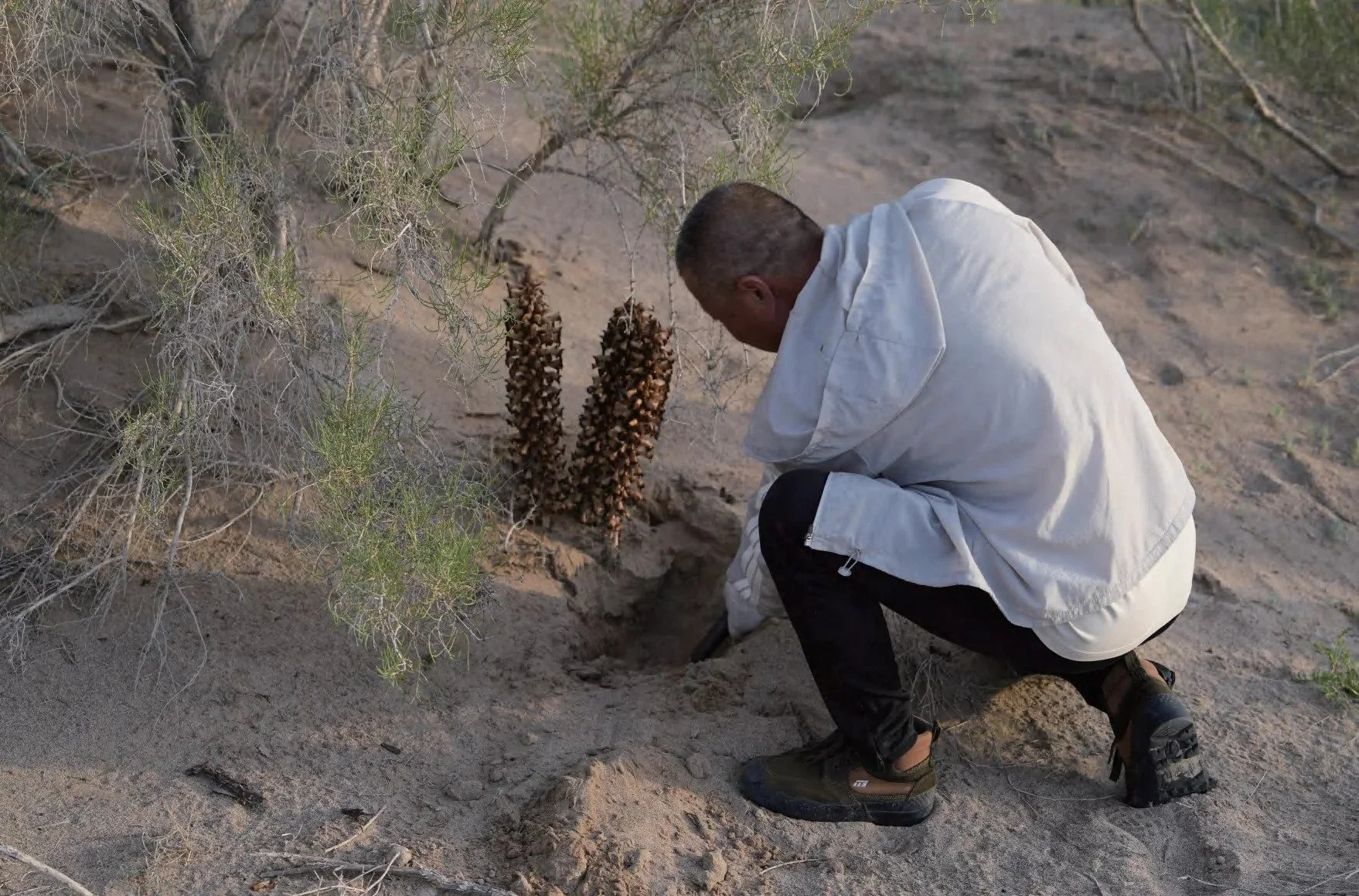
Cistanche in the field · Qaidam Basin
Field notes · sand checkerboards
Open dunes and checkerboard barriers were photographed during a field journey through the Qaidam Basin. These images document other restoration sites in the region, outside this project.
Across the wider basin
Open dunes and sand checkerboards, photographed during a journey through the Qaidam Basin. These observations come from other sites in the region, outside the project site.





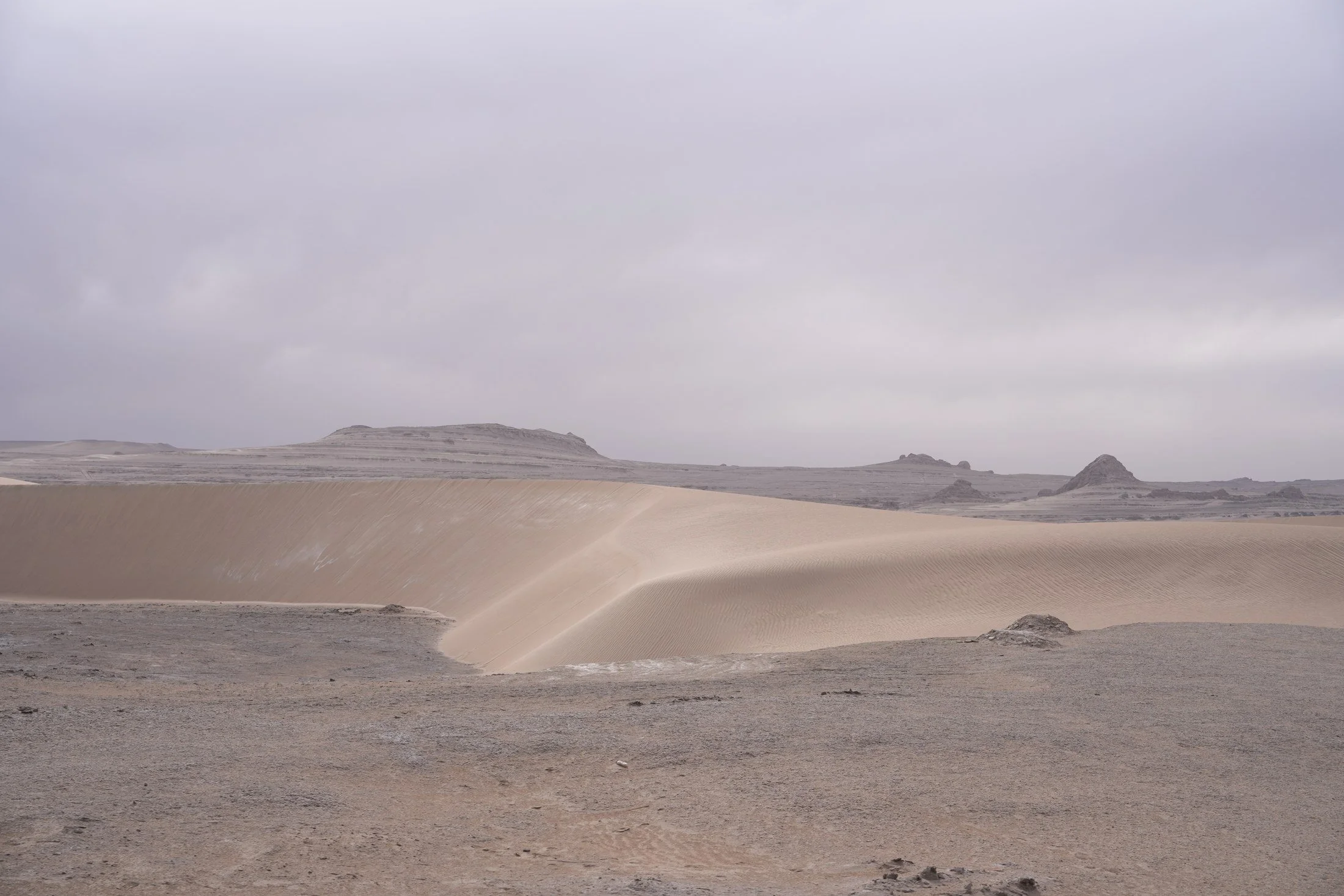
Open dunes in the Qaidam Basin. A regional landscape observation.
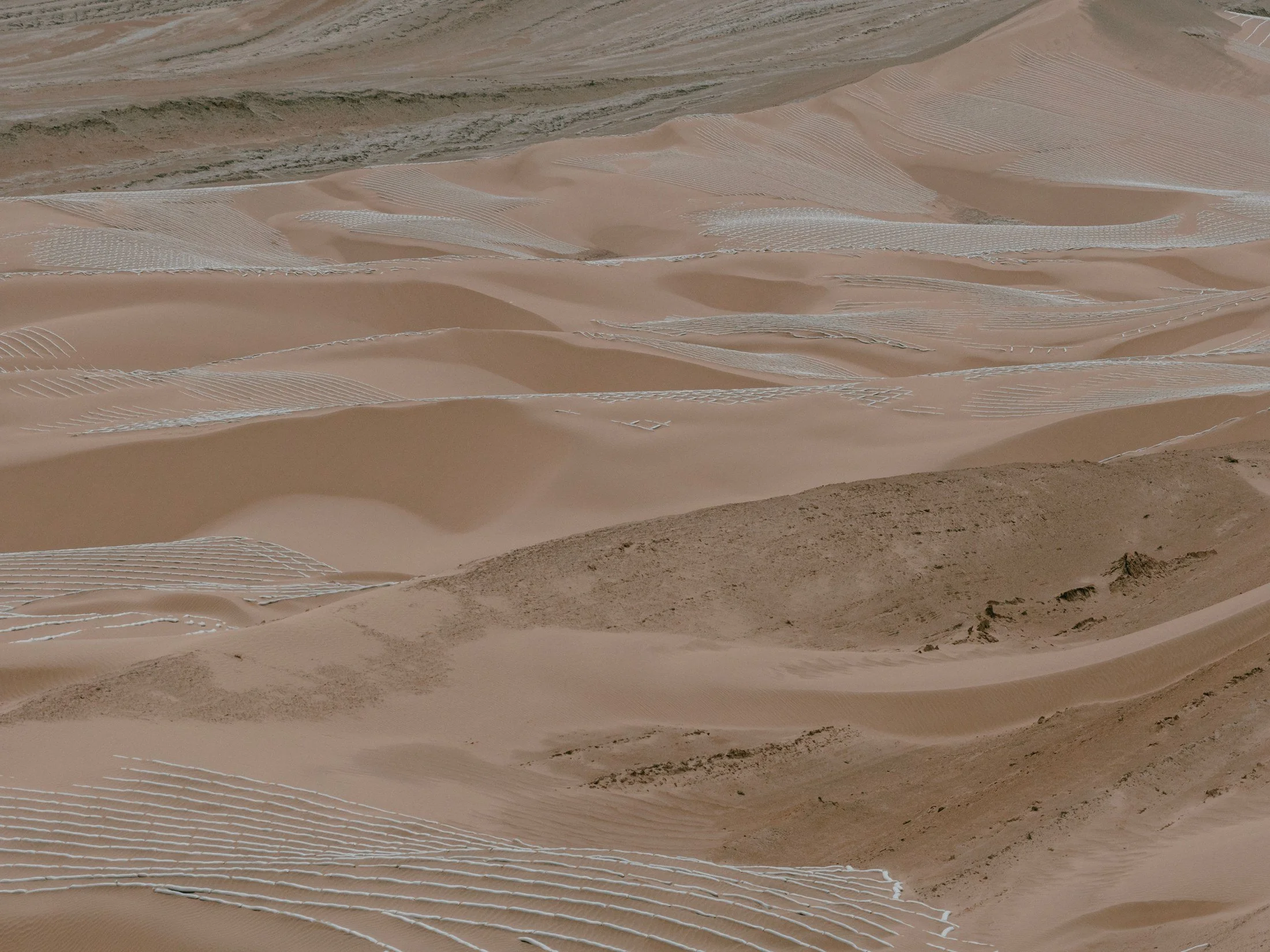
Sand checkerboards across dunes. Observed during a field journey in the Qaidam Basin; outside the project site.
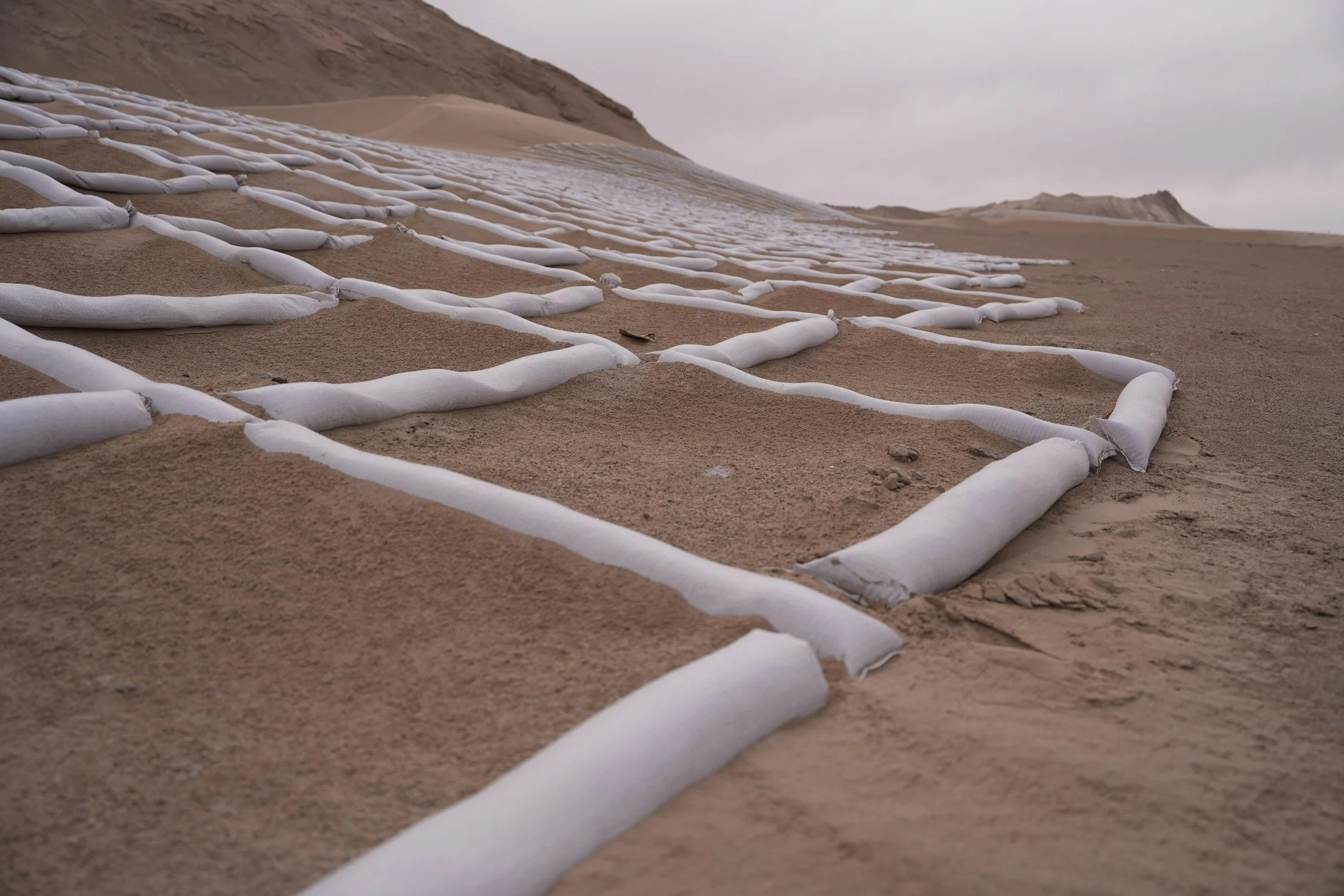
A ground-level view of checkerboard barriers in the Qaidam Basin. Regional observation, outside the project site.
Water in a changing landscape.
Springs, open channels and wetlands are part of the landscape documented during restoration. Winter ice, moving water and green margins reveal how this place changes with the seasons.
Spring water recorded after ecological restoration · Qaidam Basin
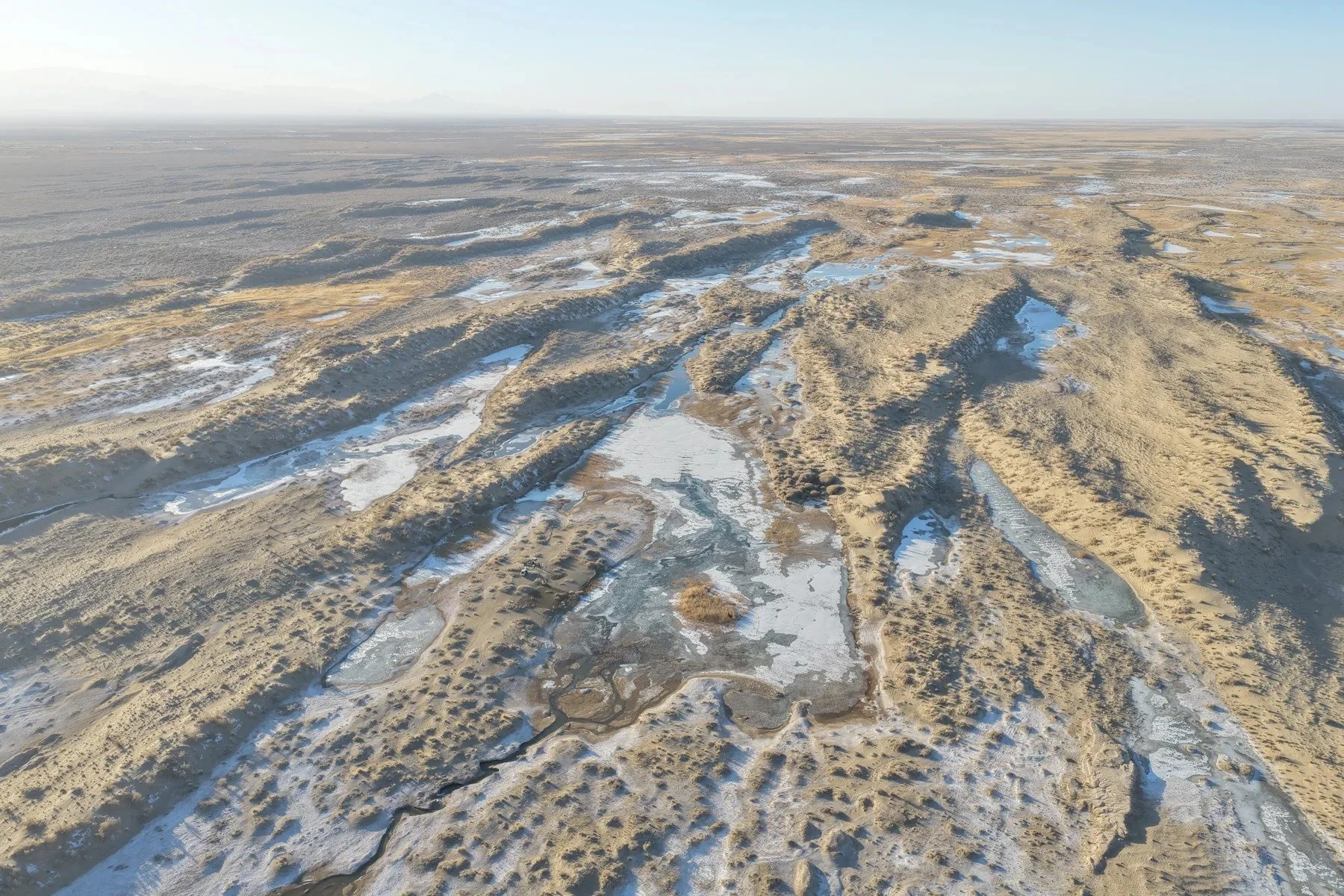
Winter waterways · Qaidam Basin
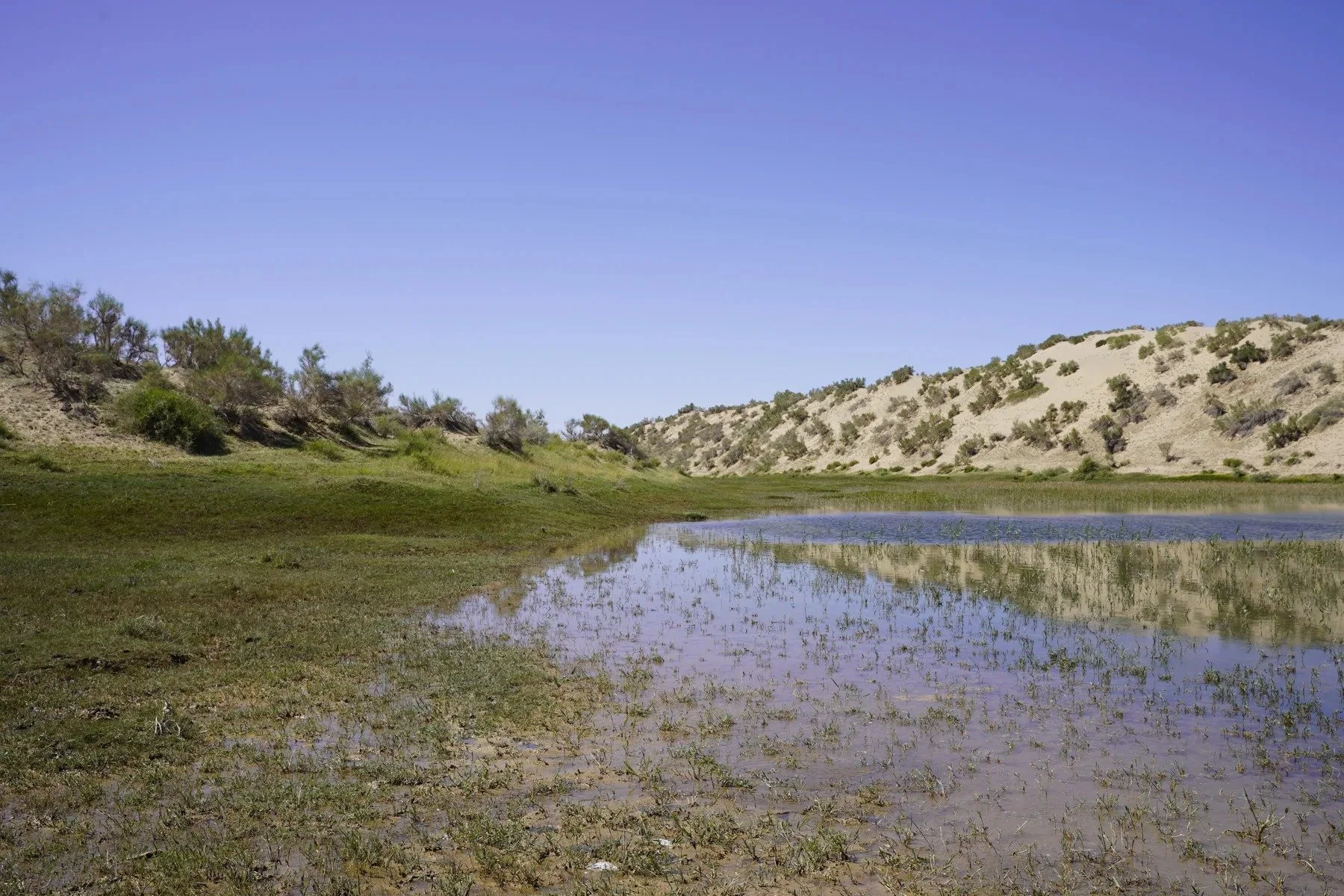
Late-summer wetland · Qaidam Basin
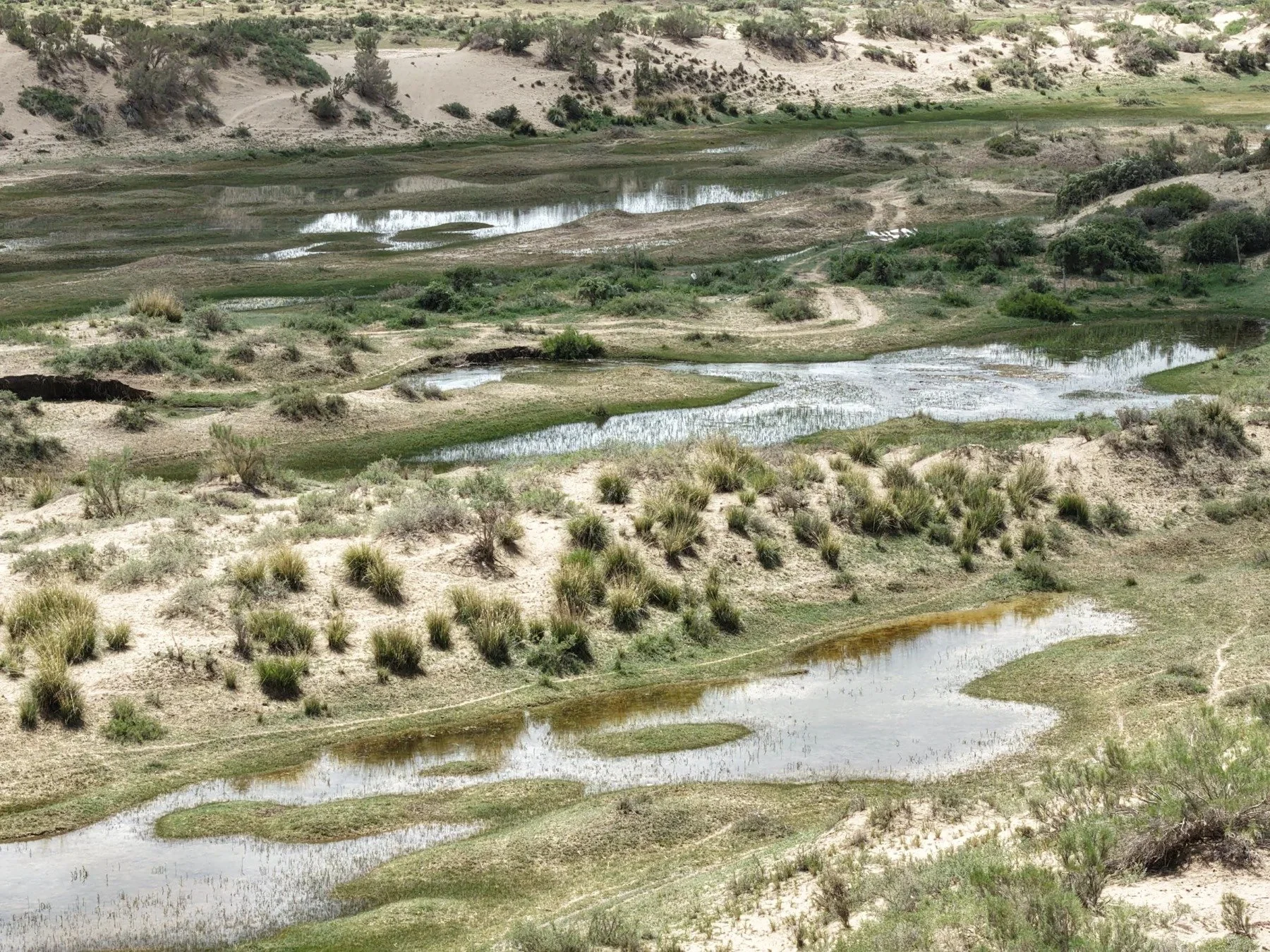
Along the water · Qaidam Basin
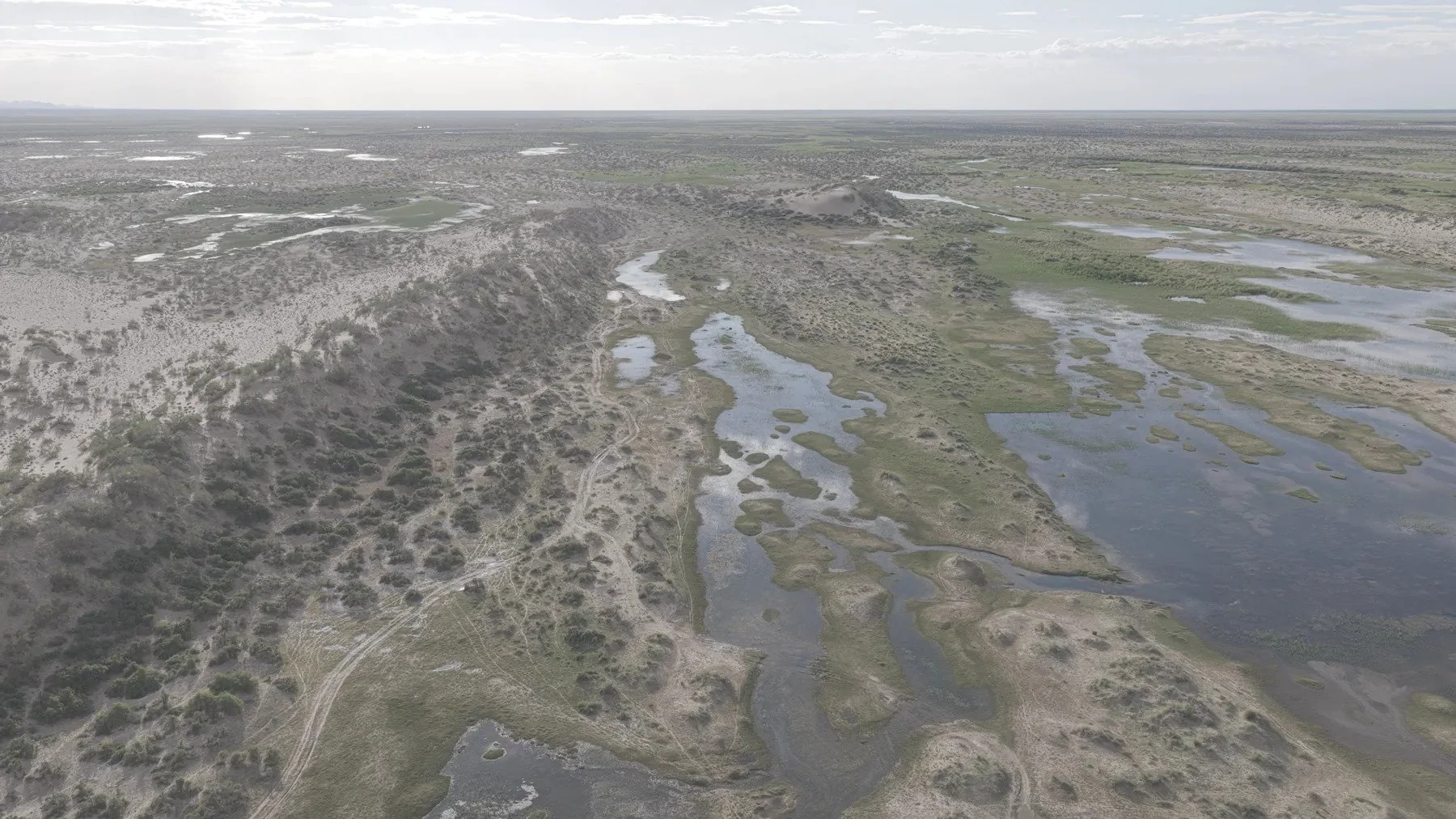
Water channels through the landscape · Qaidam Basin
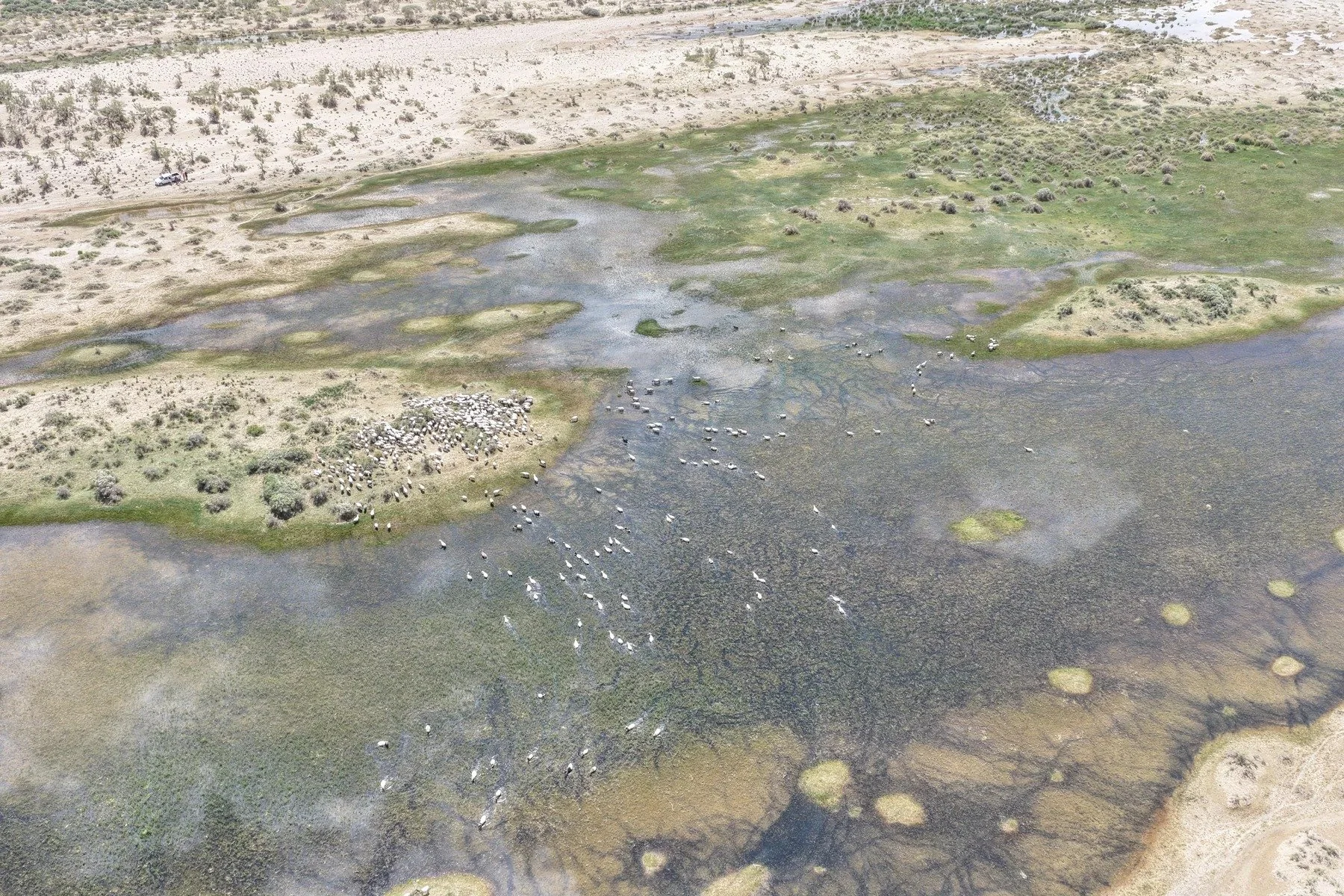
Wetland vegetation · Qaidam Basin
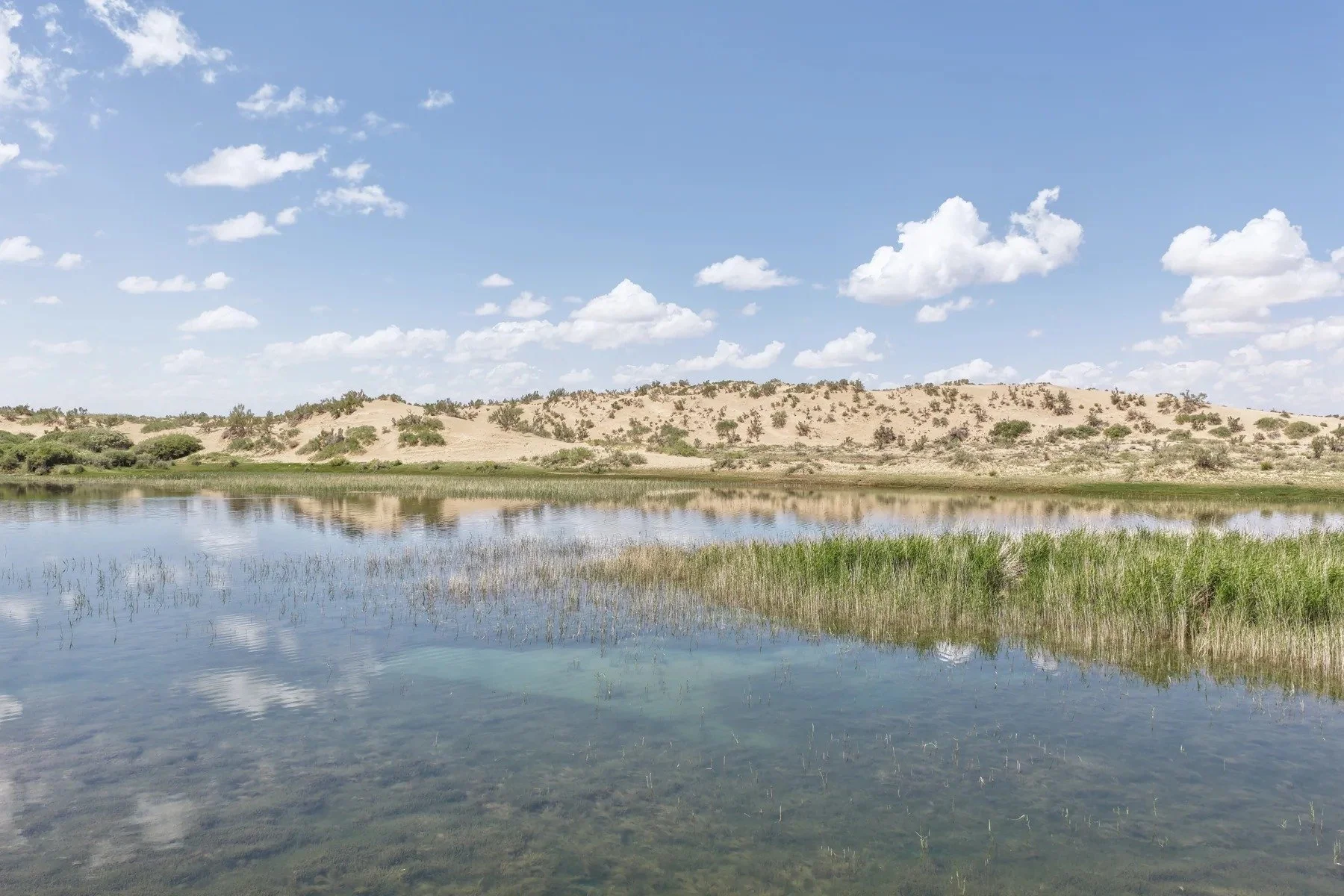
A lake among the dunes · Qaidam Basin
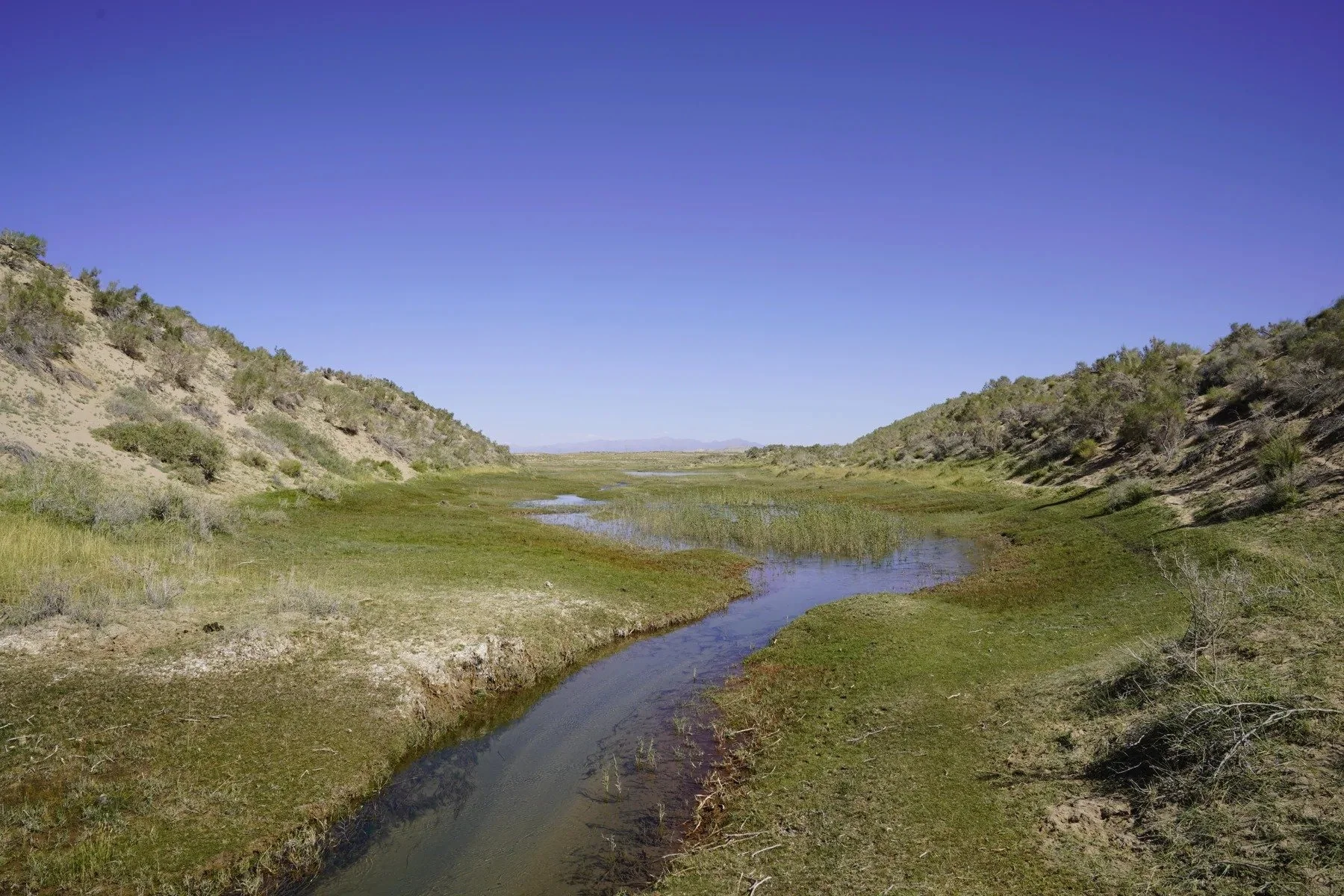
A late-summer stream · Qaidam Basin
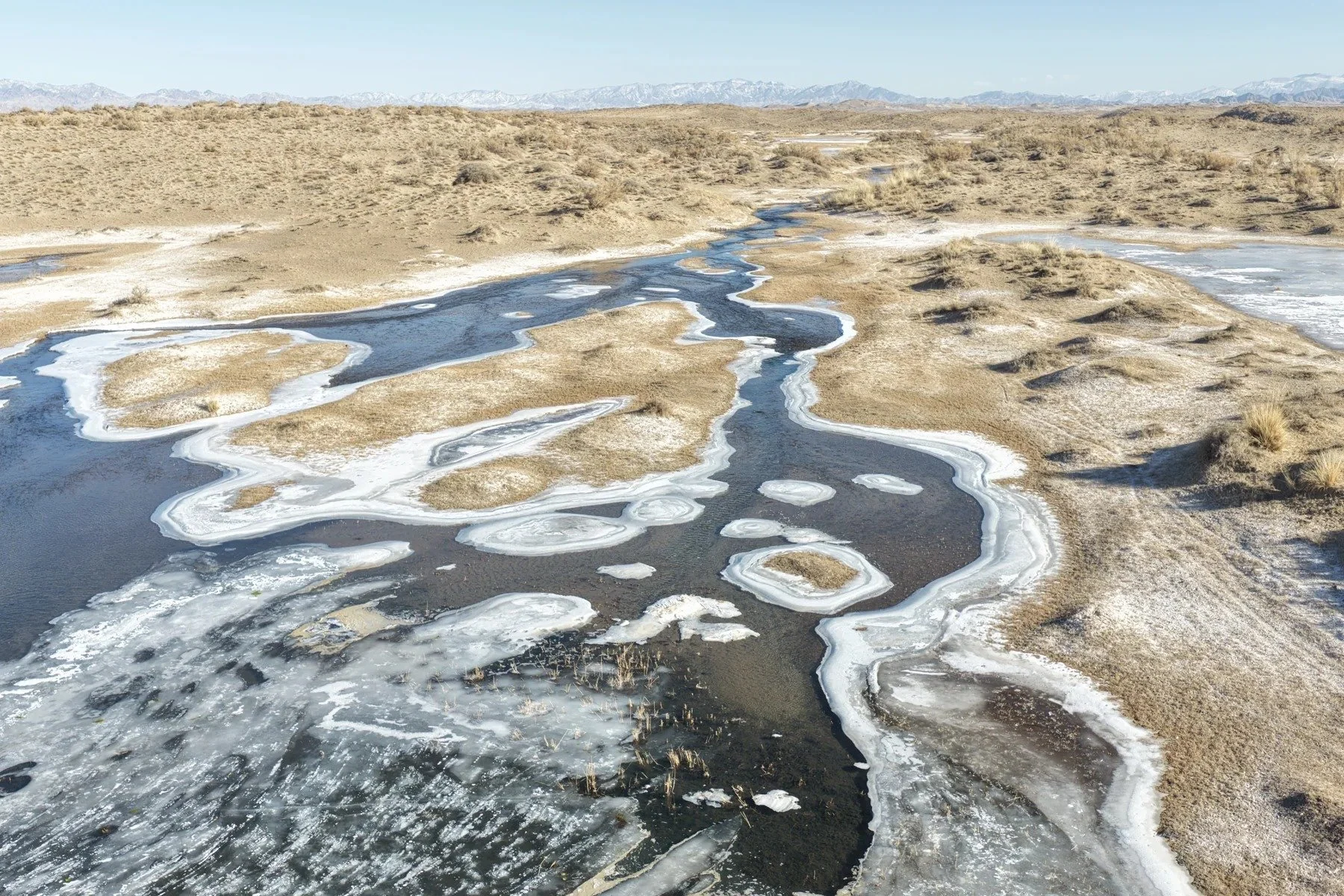
Where ice meets open water · Qaidam Basin
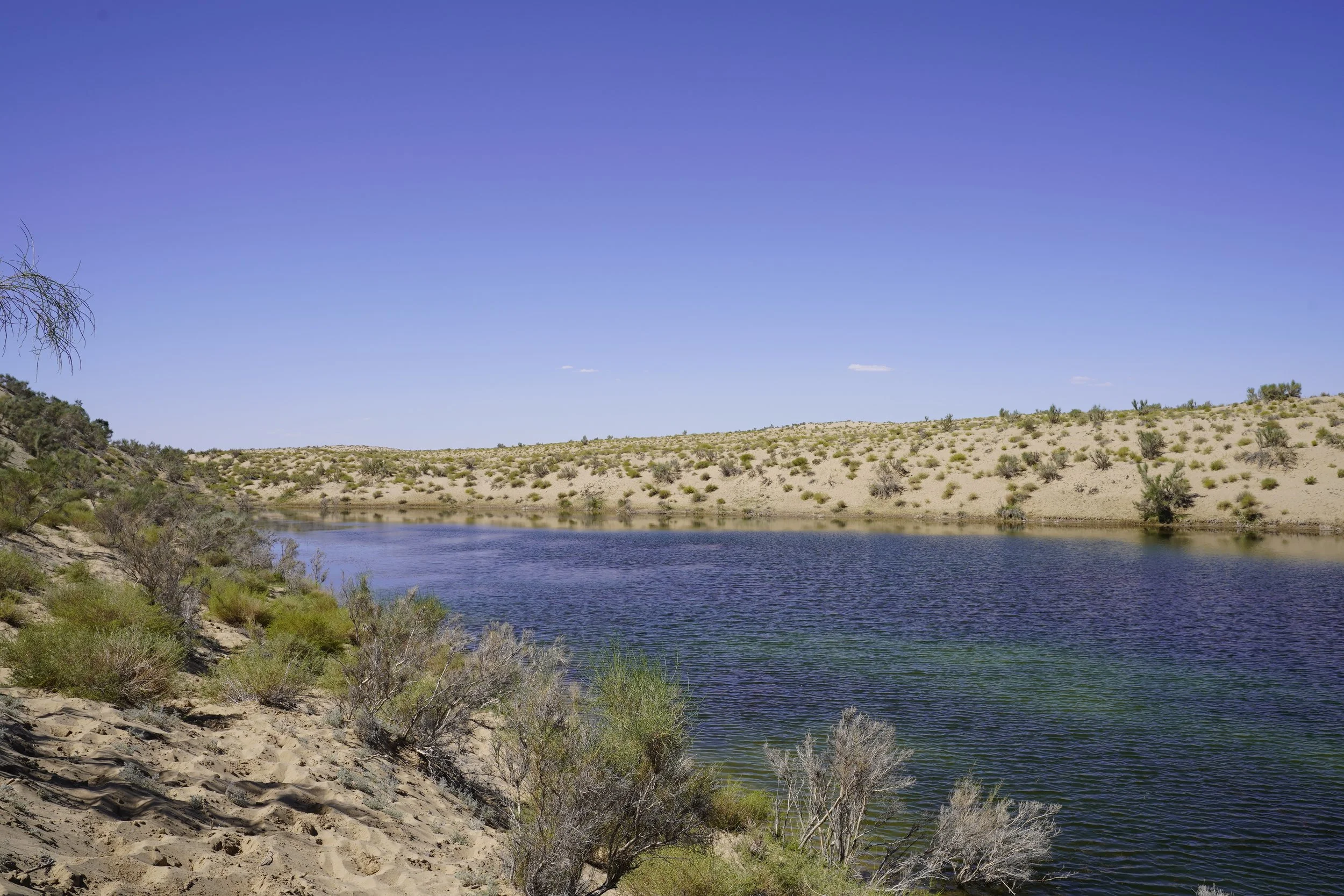
Open water between the dunes, bordered by shrubs and green banks.
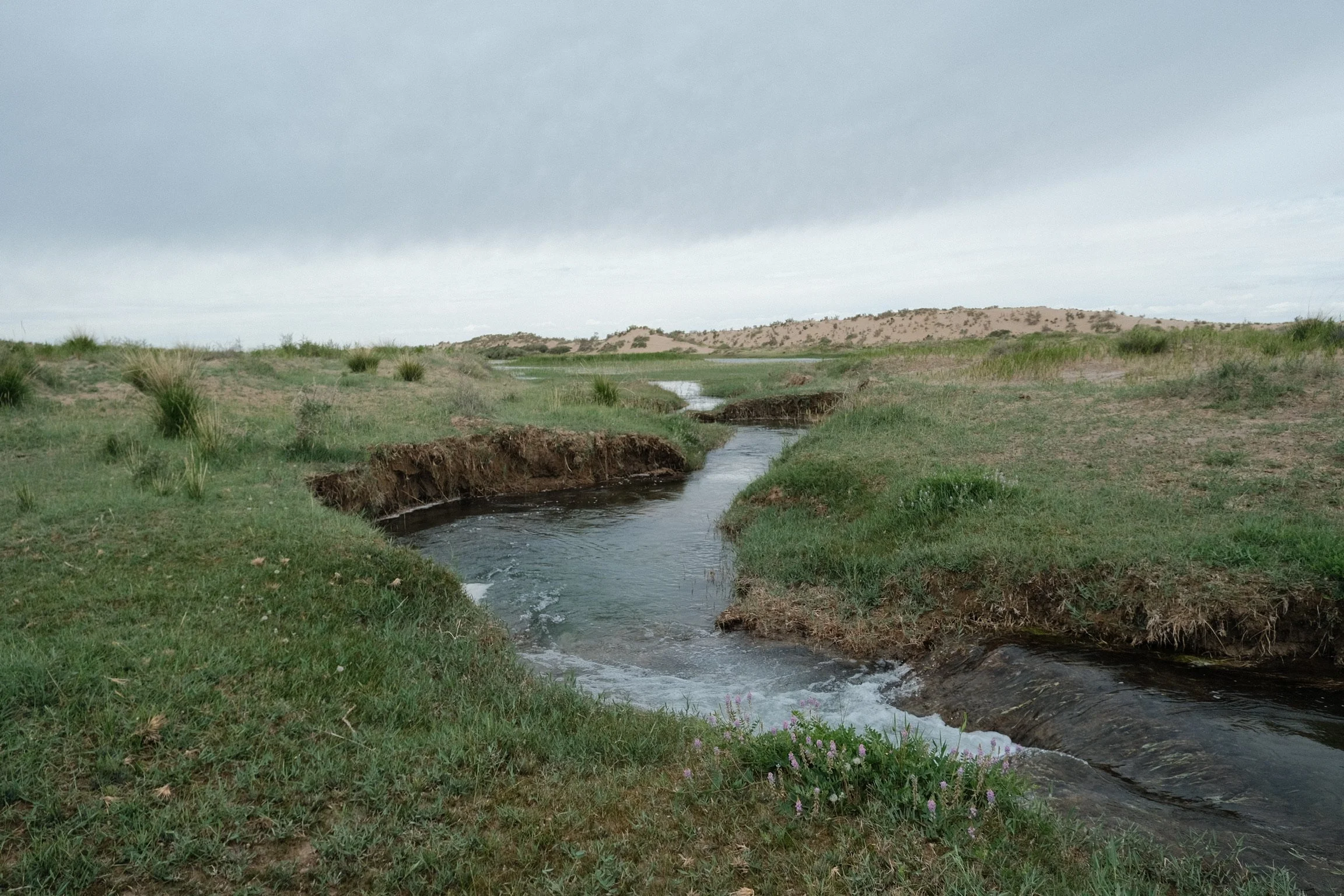
Moving water winds through grassy banks.
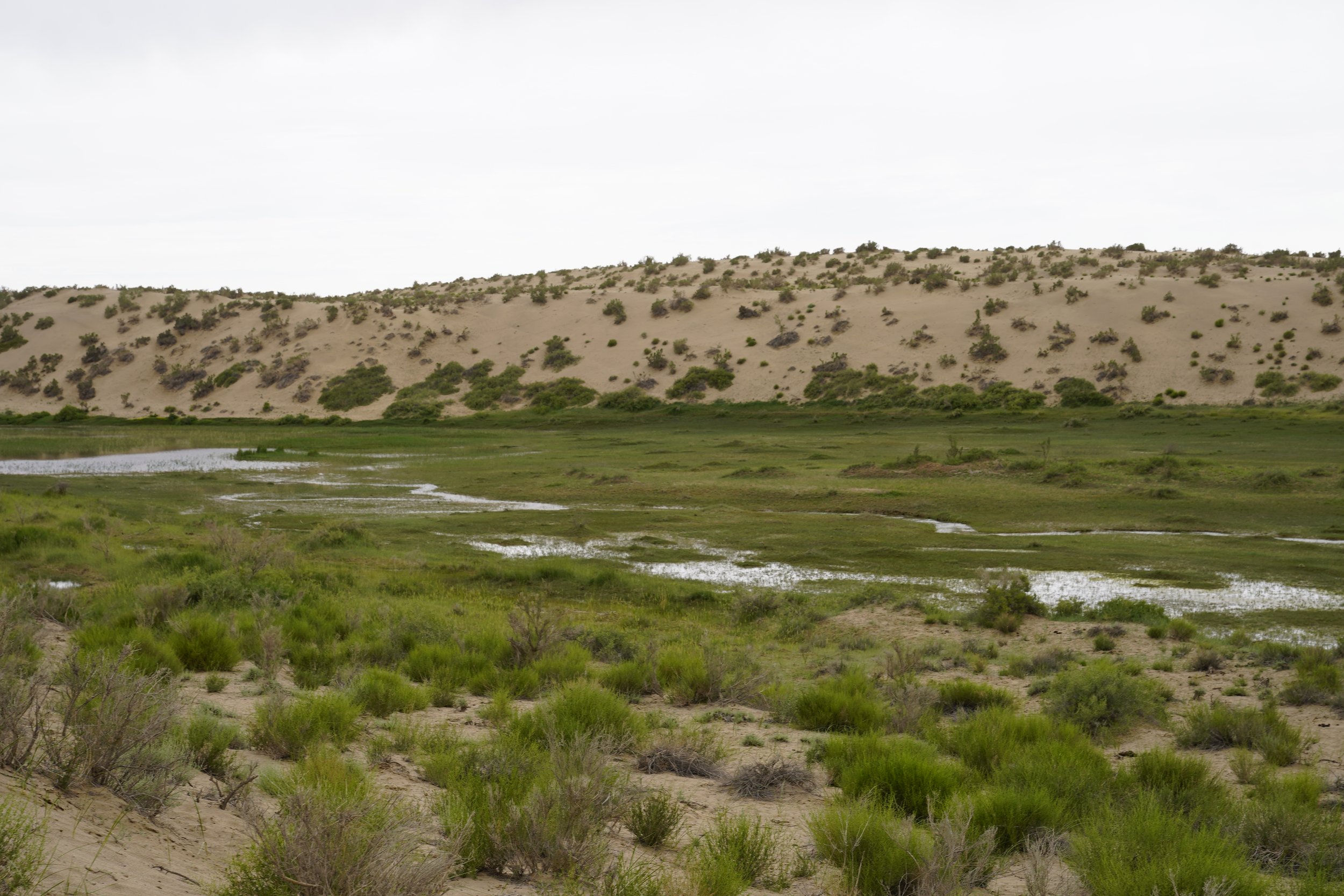
Wetland vegetation spreads along shallow water at the foot of the dunes.
A place for life.
Swans gather at the edge of winter ice; insects settle among the shrubs. Alongside these encounters with wildlife, sheep and camels reflect the continuing work of local herders.
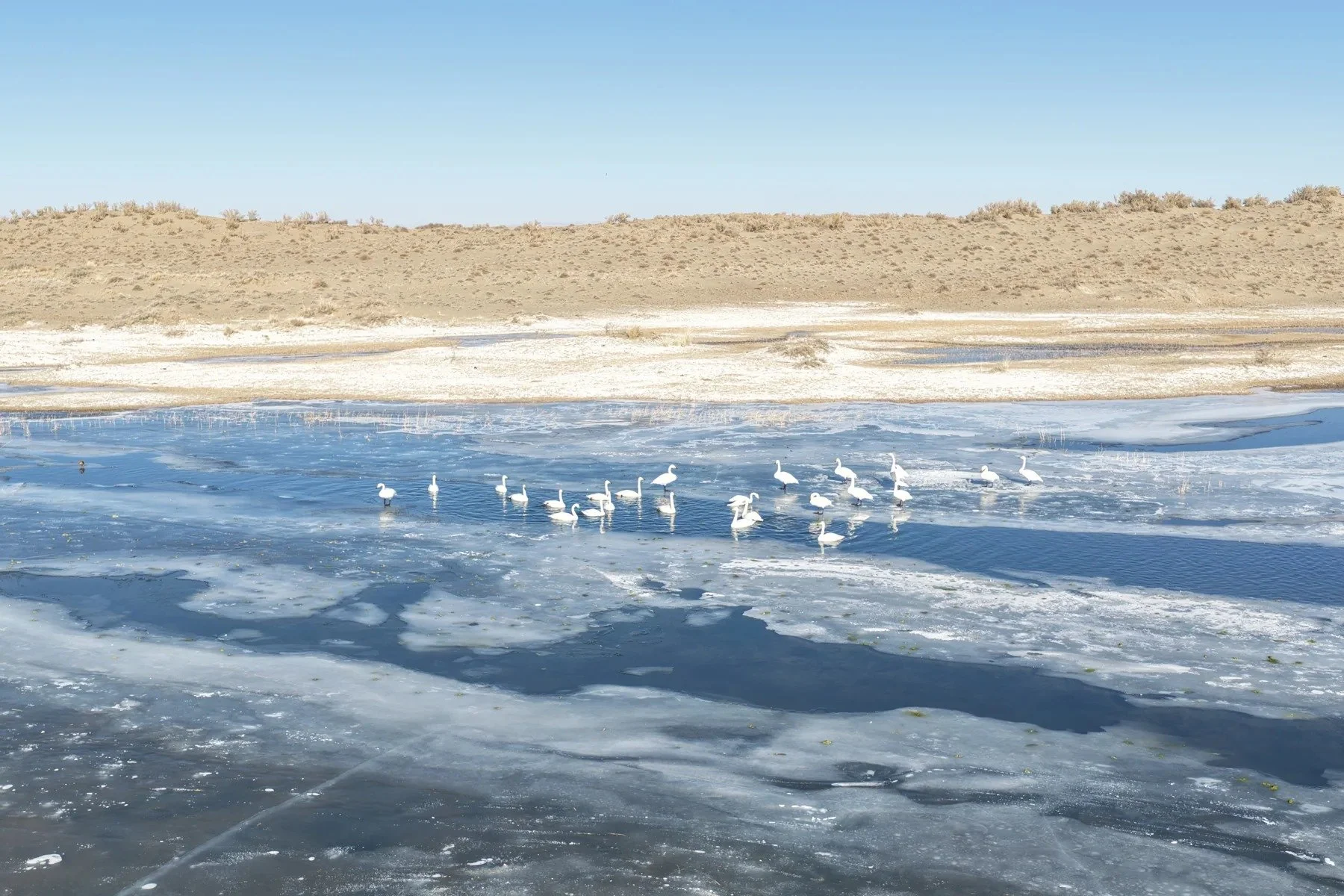
Swans at the edge of winter ice · Qaidam Basin
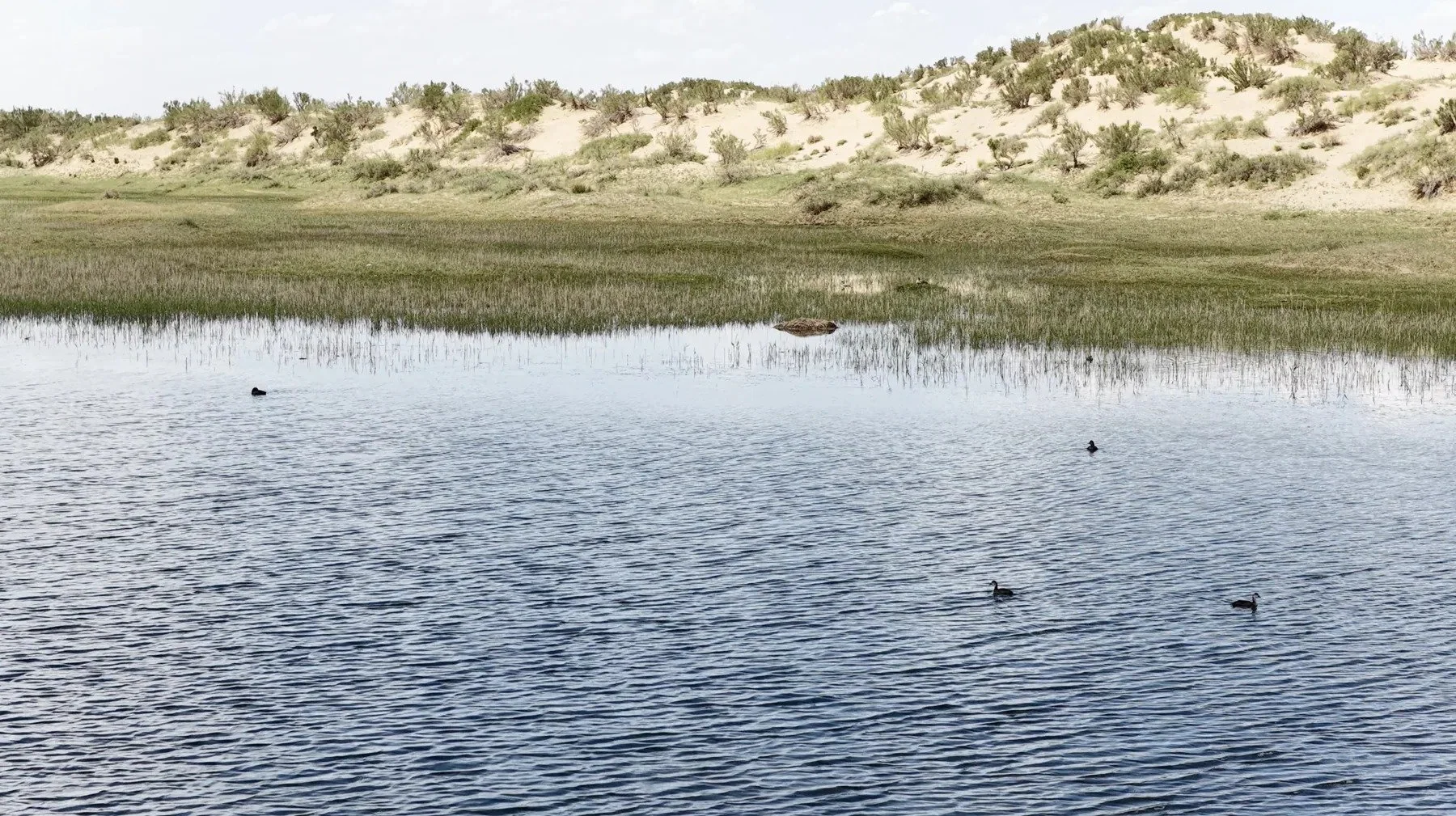
Birds in the landscape · Qaidam Basin
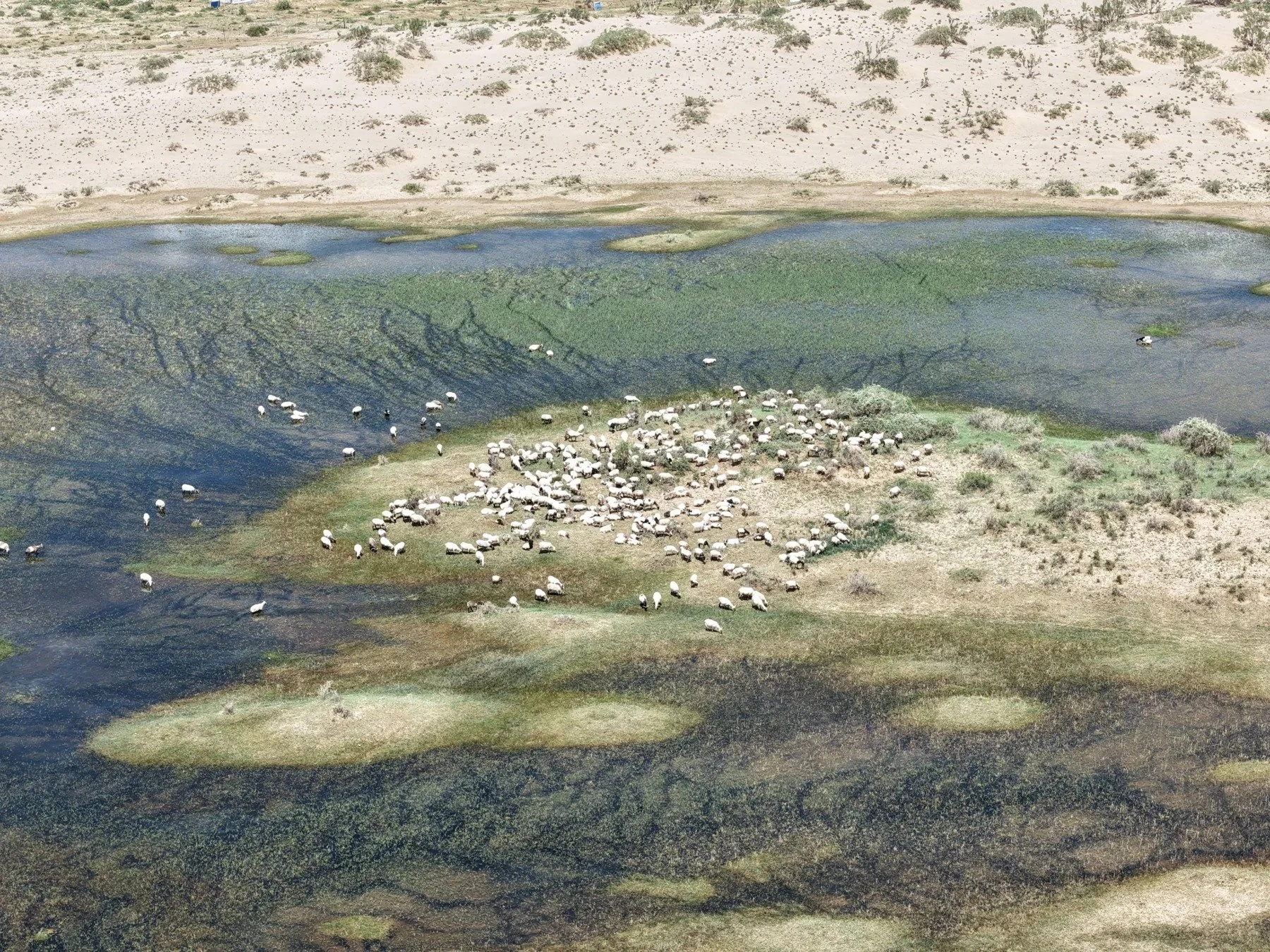
Sheep along the shore · Qaidam Basin
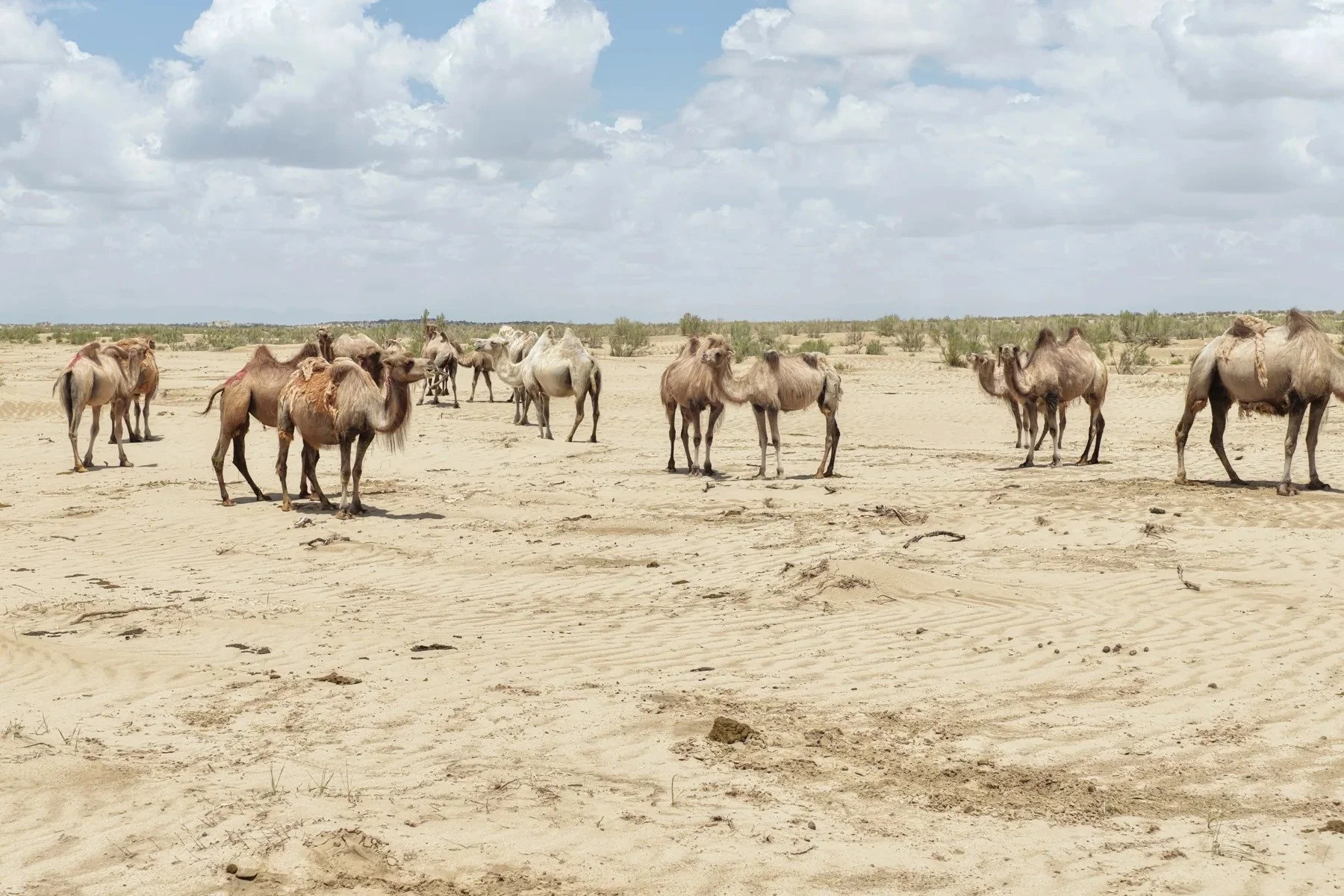
Camels among shrubs · Qaidam Basin
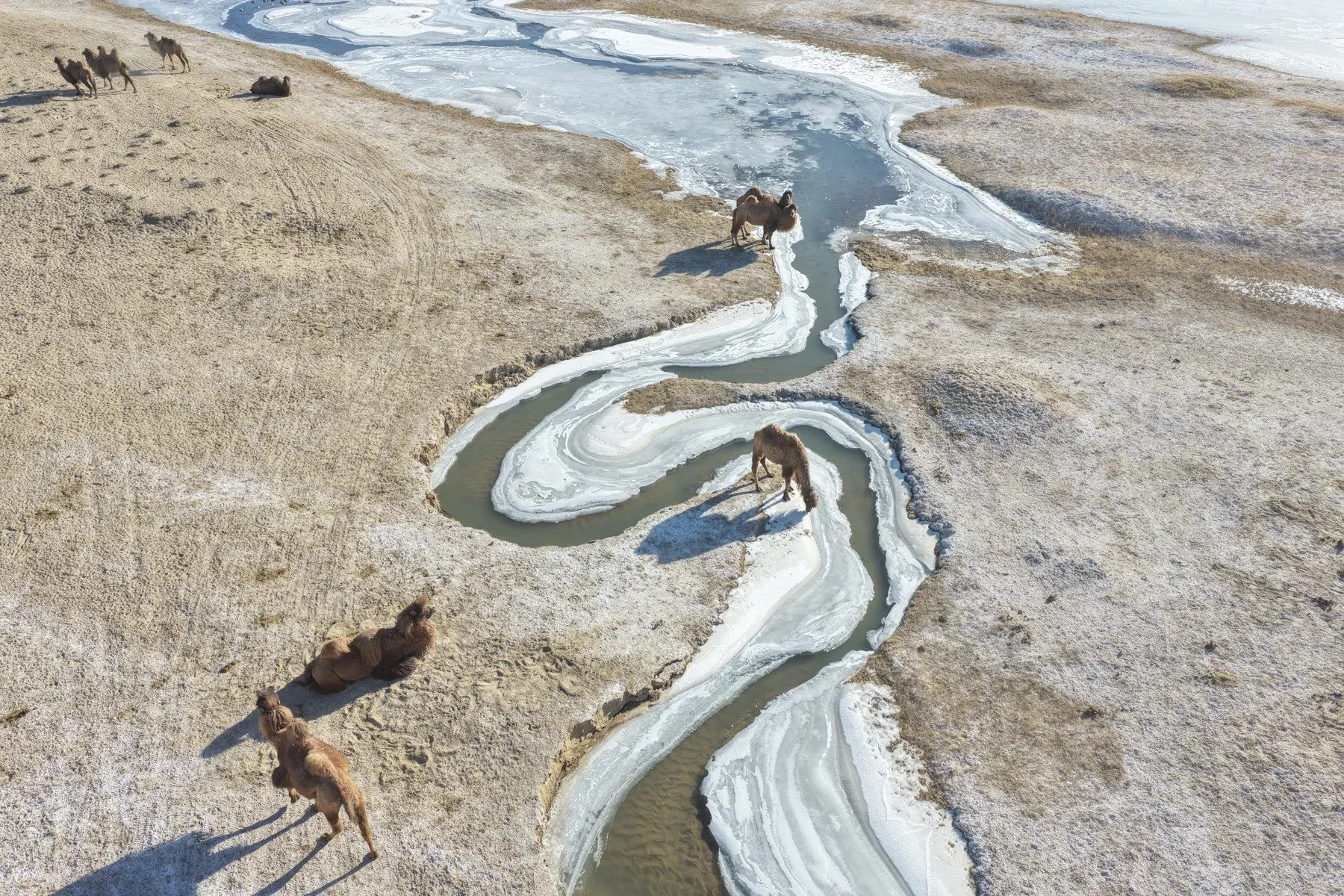
Camels in winter · Qaidam Basin
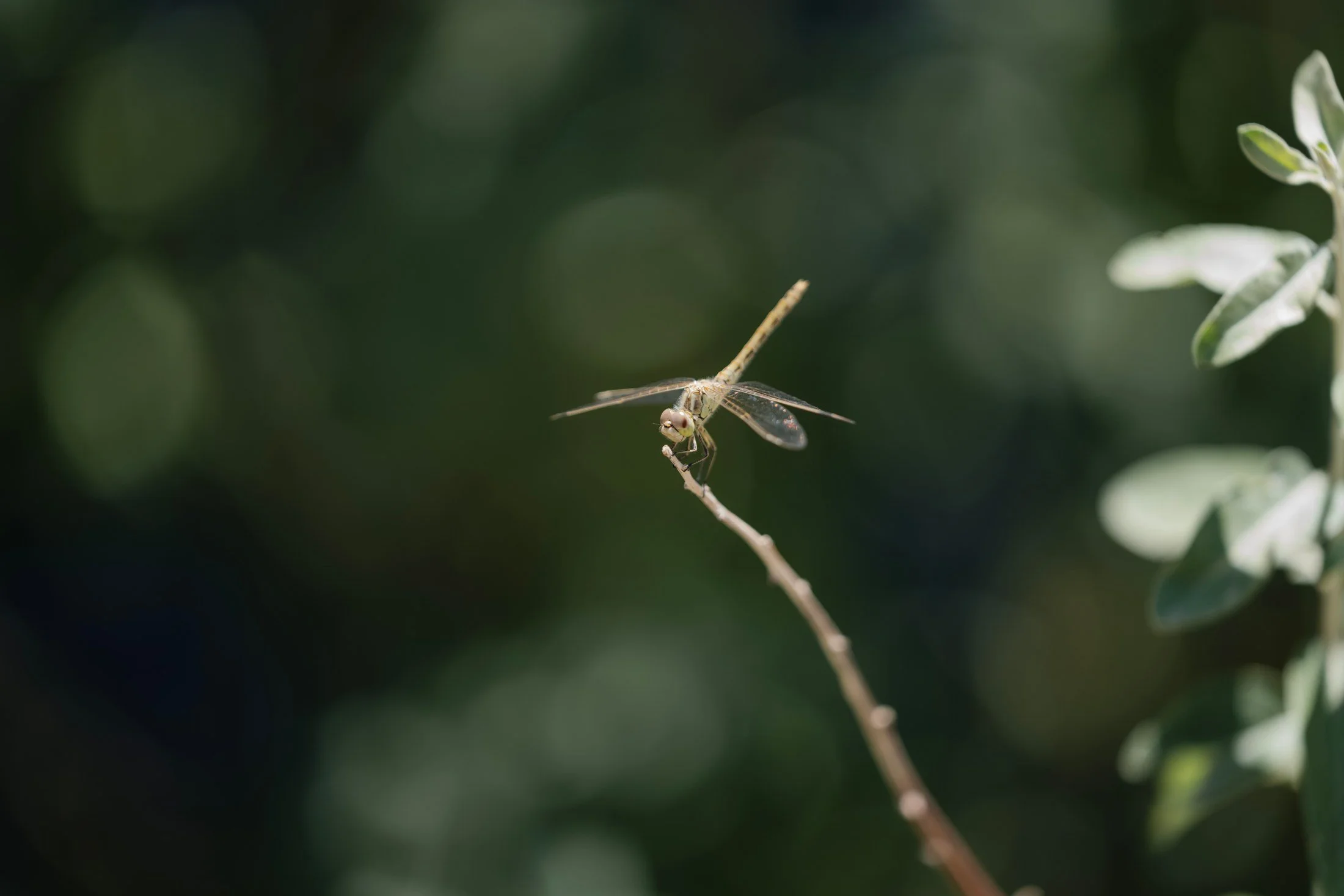
A dragonfly at rest. A close observation from the July field archive.
From the land, a livelihood.
Goji fields, medicinal crops and grazing connect the land with everyday work. For farming and herding families, restoration continues through planting, tending, harvesting and caring for the landscape.
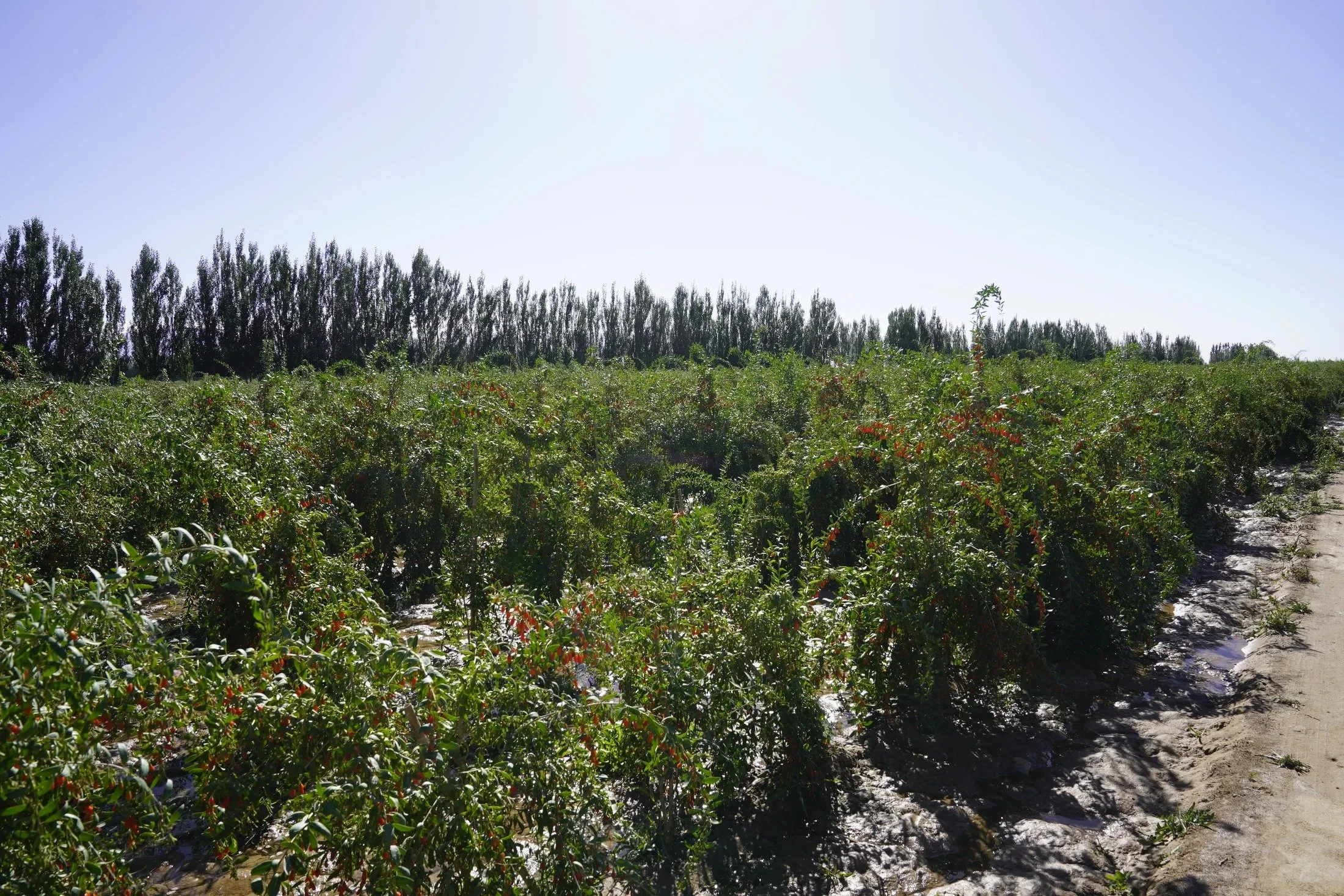
Rows of goji in late summer · Qaidam Basin
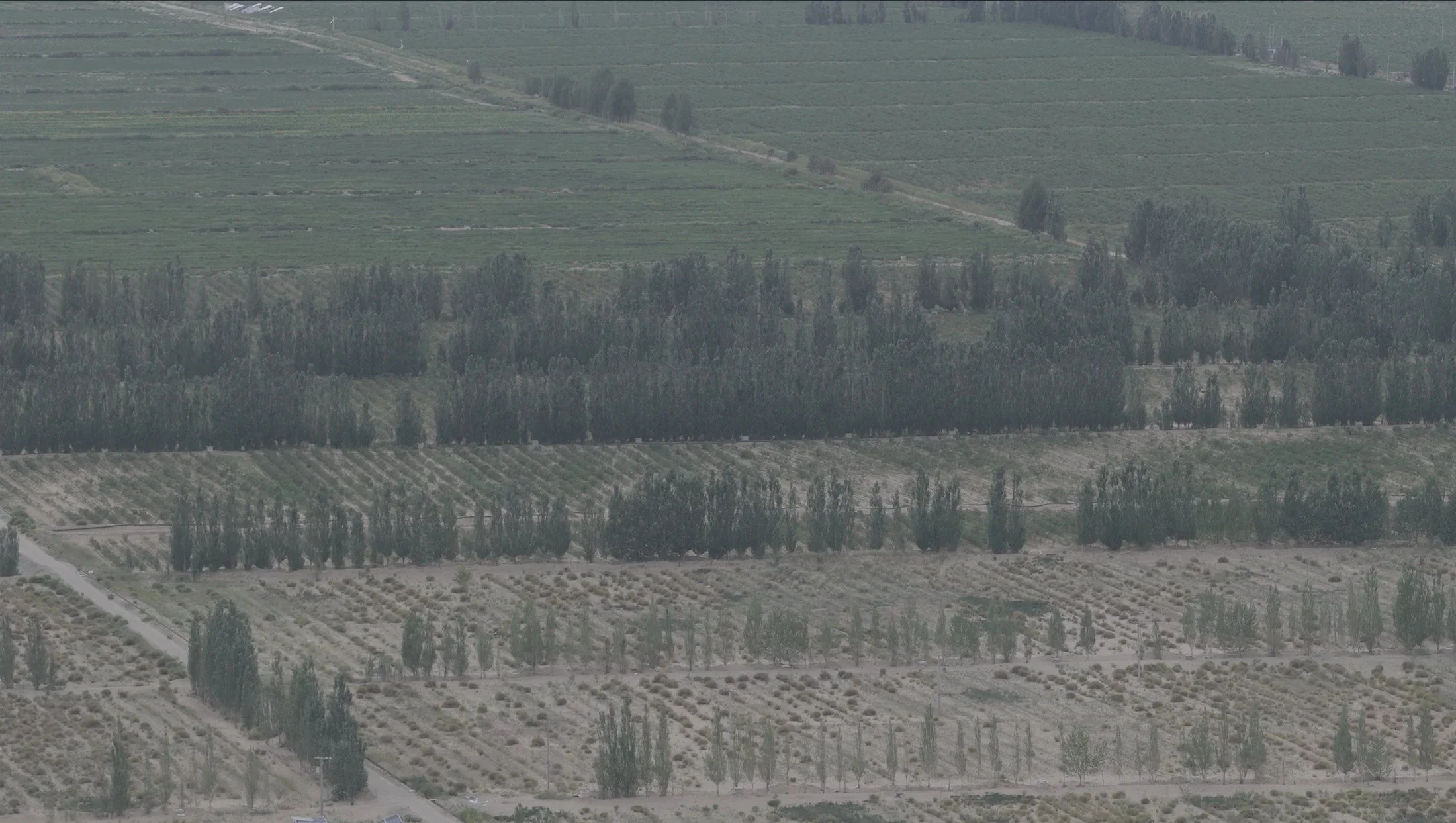
Fields and shelterbelts · Qaidam Basin
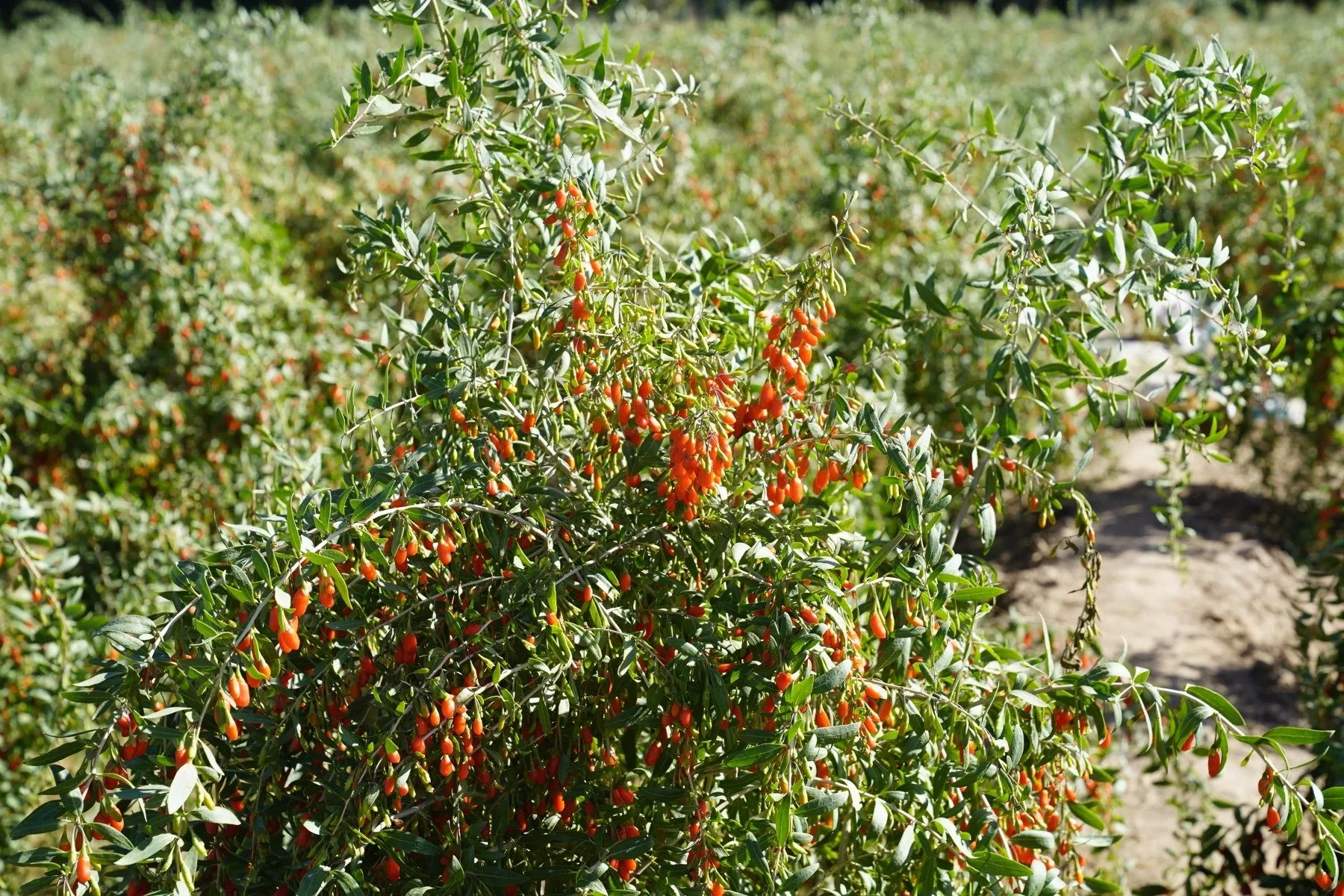
Goji berries ripen on the branches · Qaidam Basin
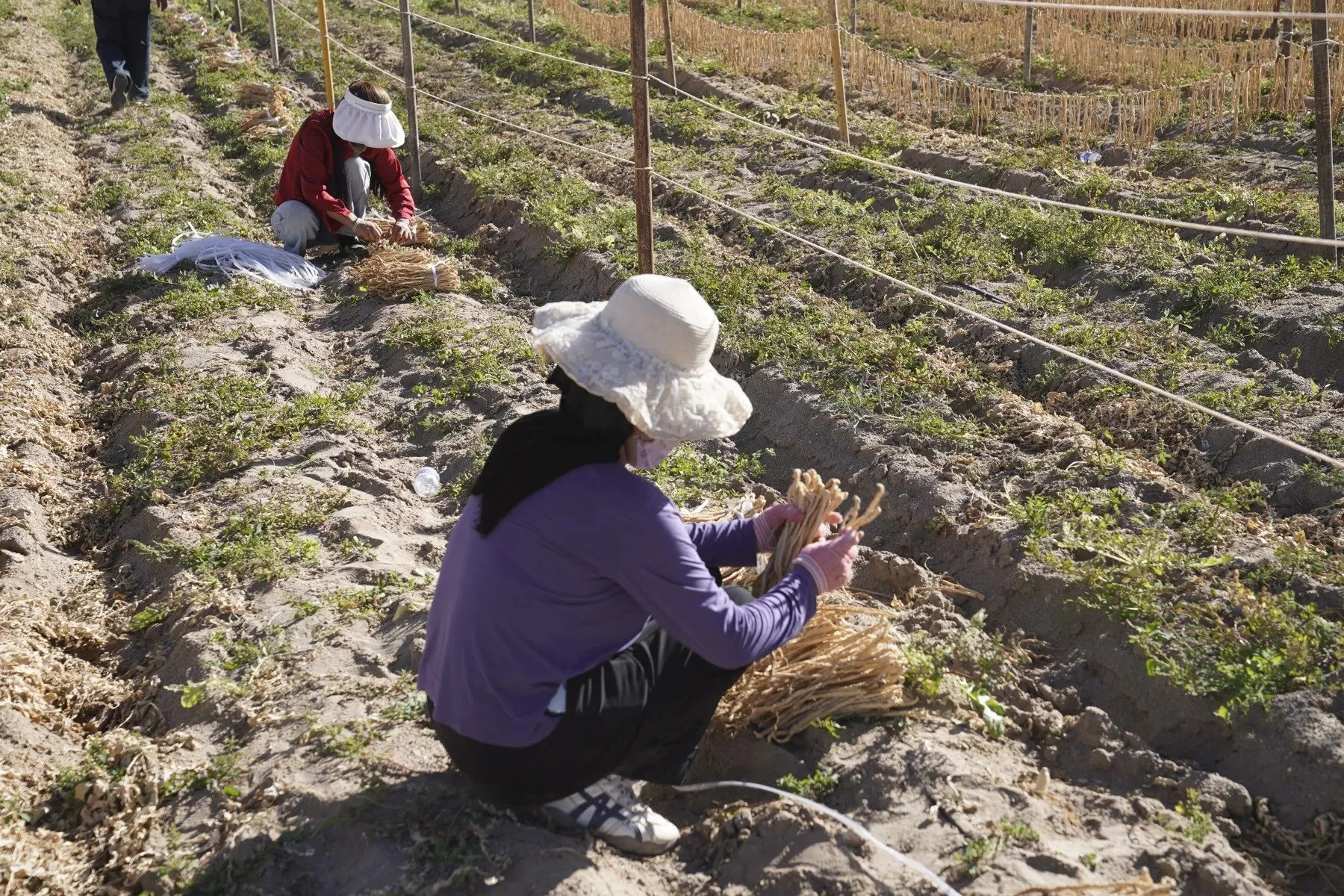
Gathering the harvest · Qaidam Basin
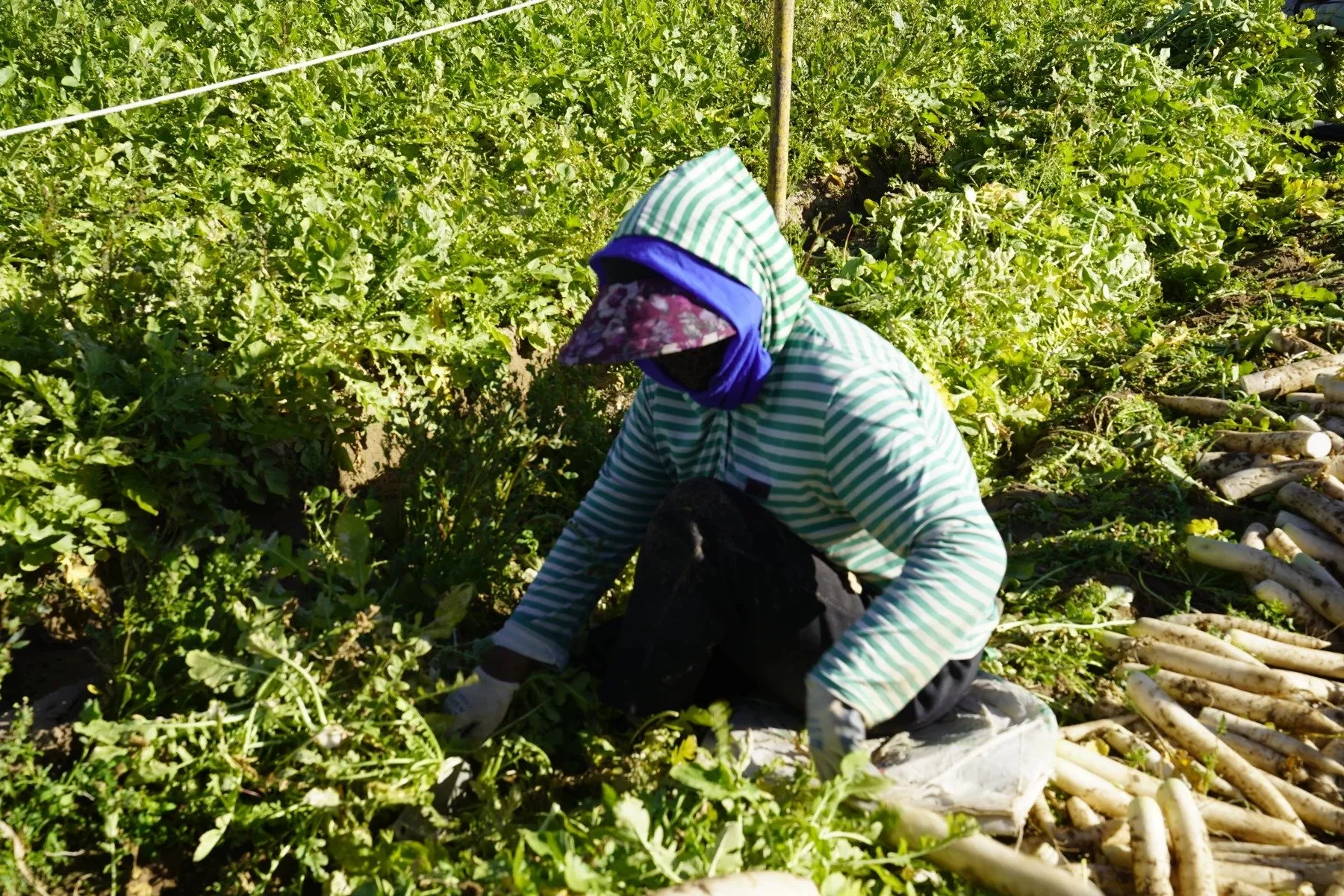
Sorting the harvest · Qaidam Basin
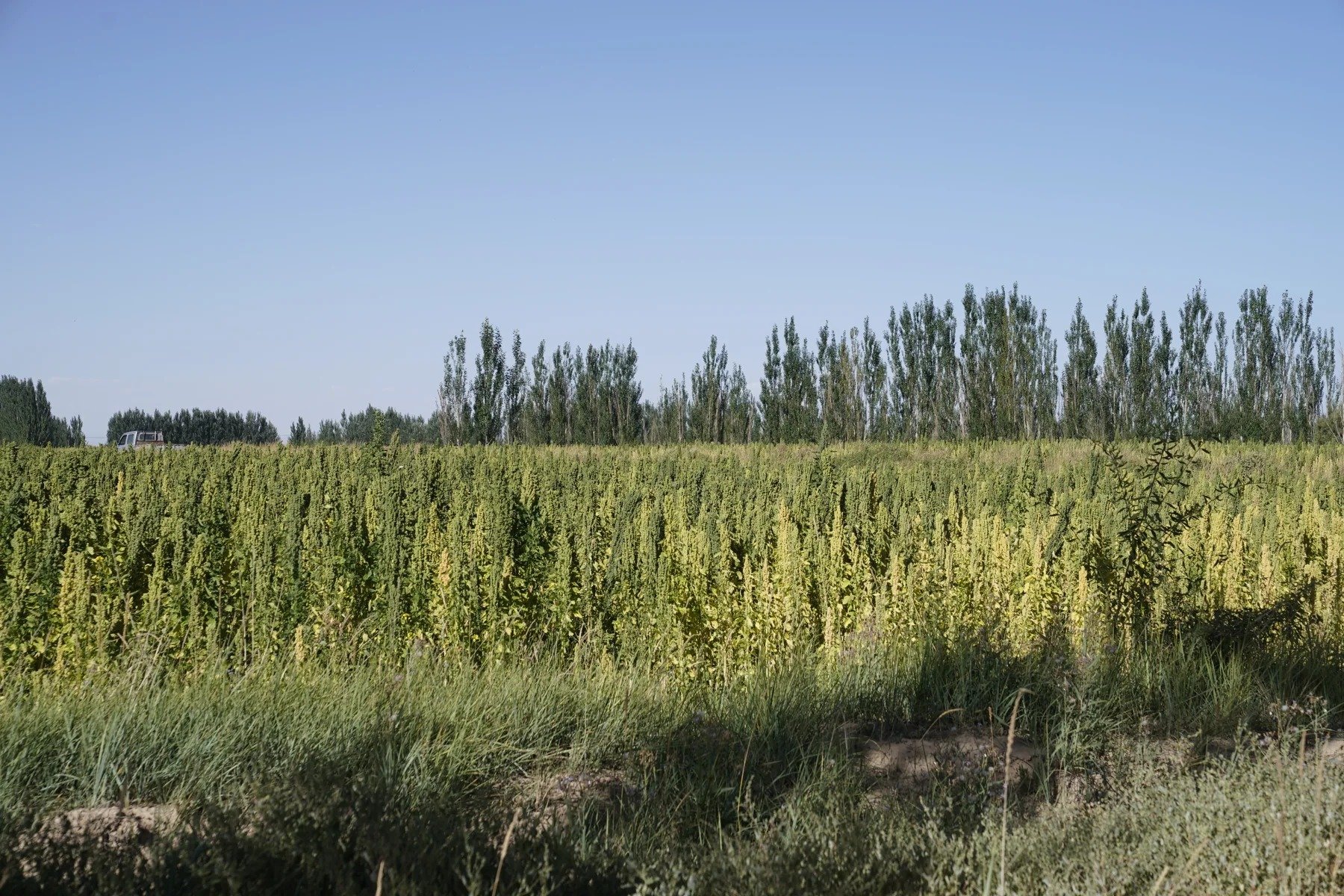
Cultivated fields · Qaidam Basin
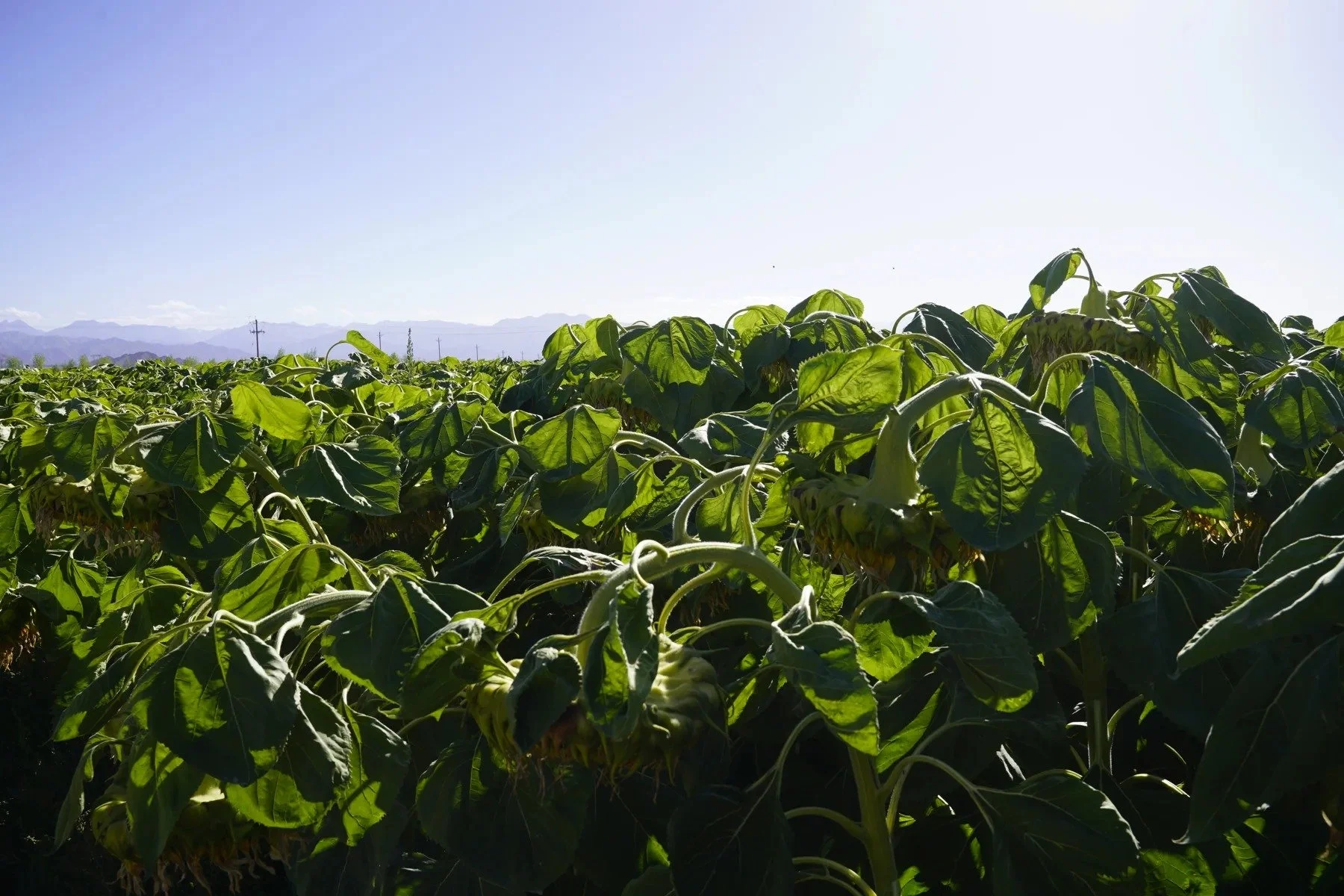
A closer look at the crops · Qaidam Basin
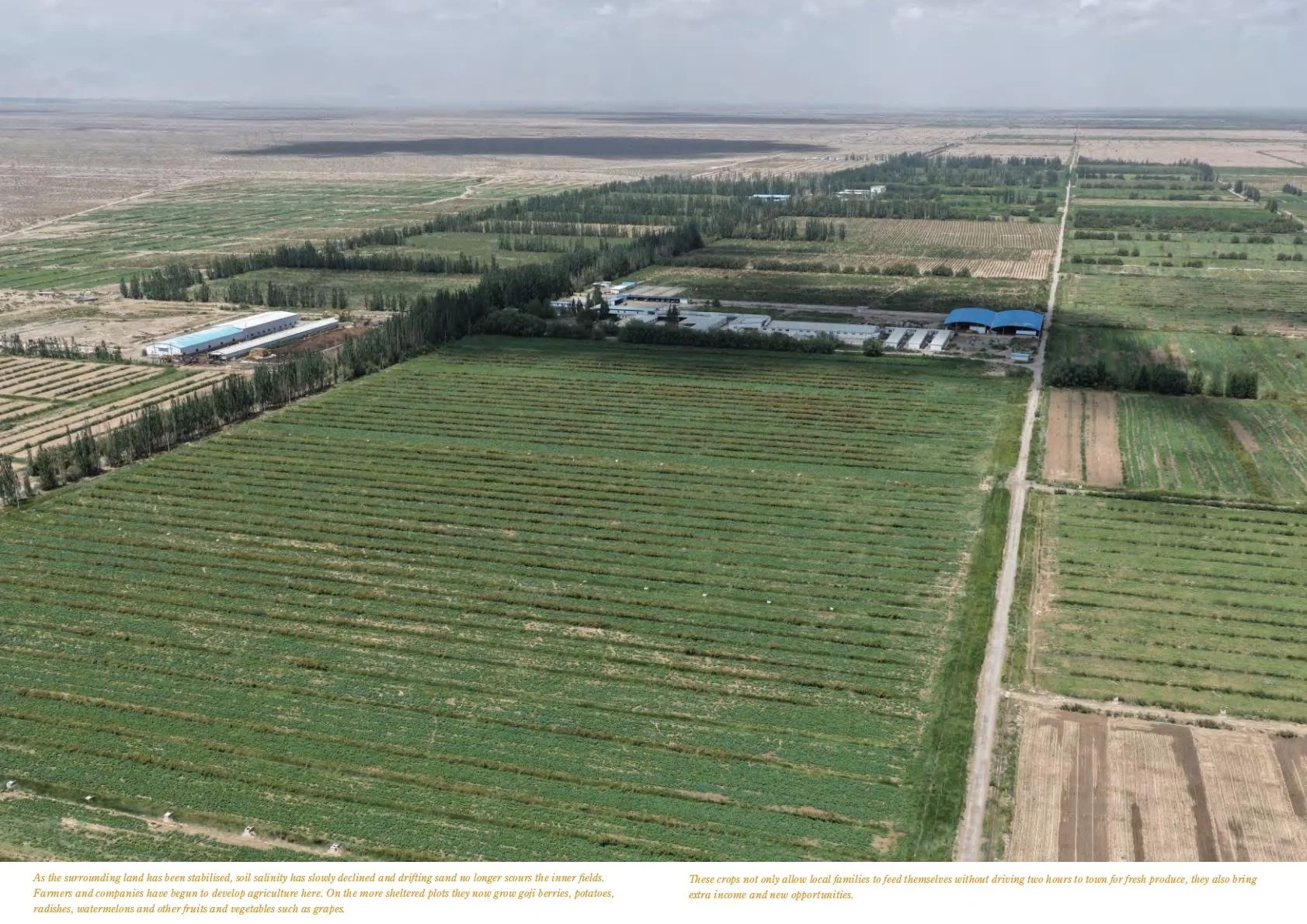
Cultivated fields and shelterbelts seen from above.
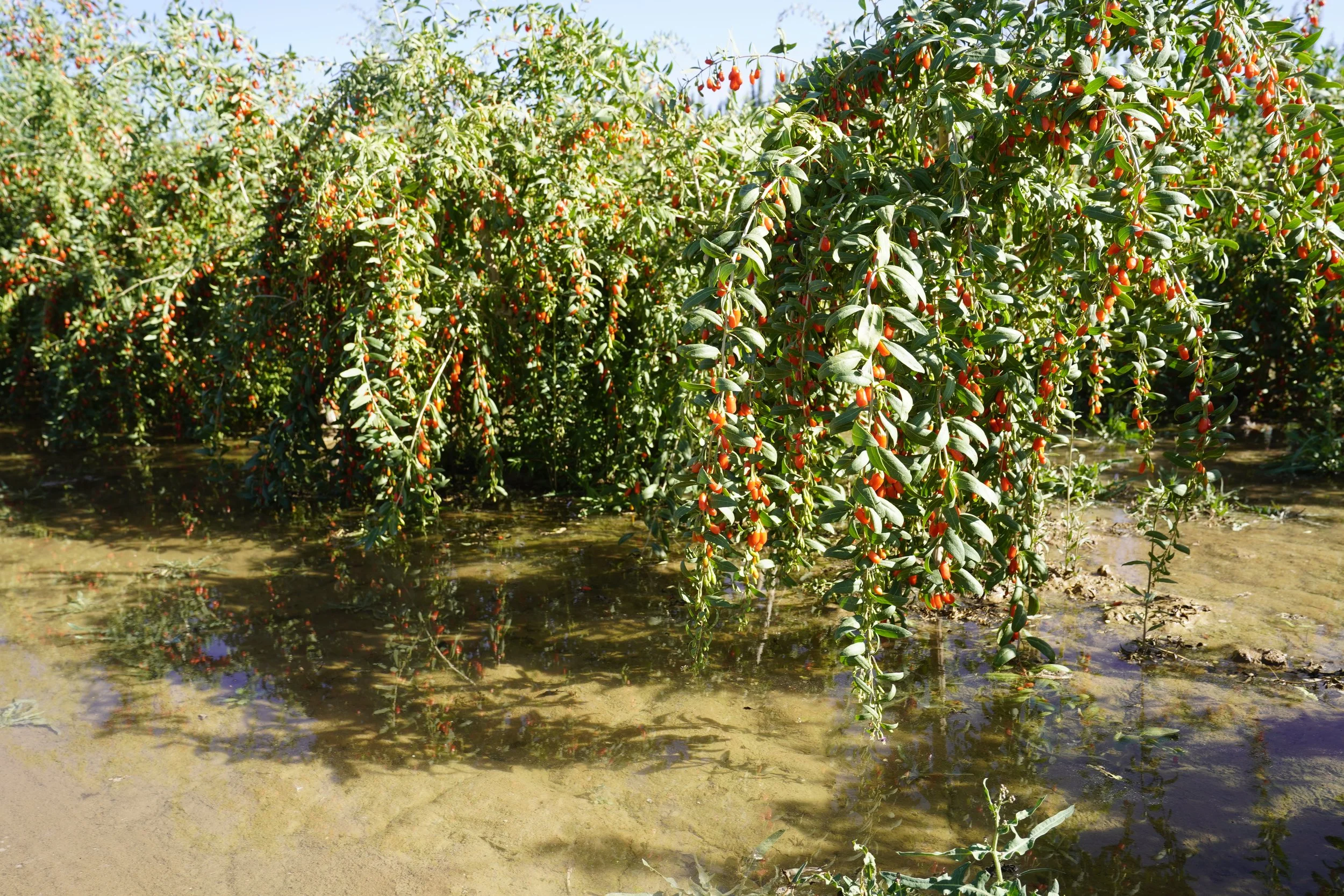
Goji berries ripen on heavily laden branches.
Field films
Brief field recordings of water, wildlife and sand checkerboards across the Qaidam Basin.
Swans in flight · Qaidam Basin
Sand checkerboards · regional observation, outside the project site.
Flowing water · Qaidam Basin
Across the landscape · Qaidam Basin